
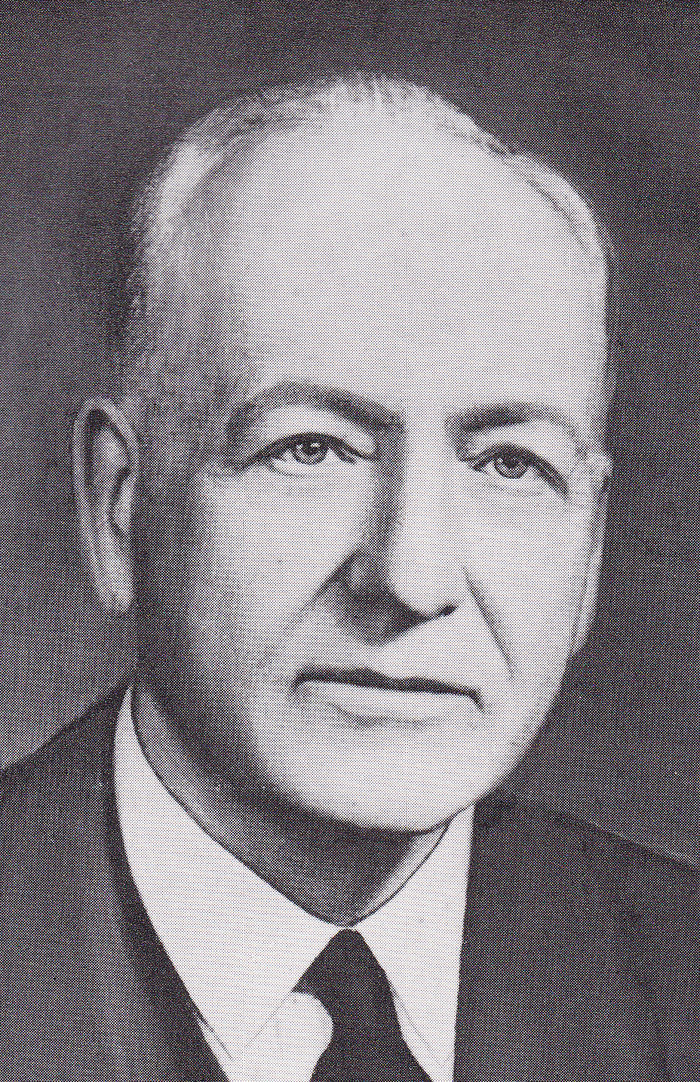
John Dean Crain was born October 25, 1881 in a cabin near Glassy Mountain. He was the fifth child of seven born to David Hoke Crain and Jane Suddeth Crain. Dean began working on the family farm as soon as he was old enough to do chores. It was hard work from sun up to sun down and Dean later credited his well-known sense of humor to those days when life demanded a sense of humor.
When Dean was 10 years old, some people in the community decided that their kids needed a school. They saw the ignorance and illiteracy in the Dark Corner and they wanted their kids to have the advantages that kids in other communities had. So, they opened up a small one-room grammar school near Ebenezer-Welcome Church. It was in this school, for a few weeks each summer, that Dean received his first formal education.
1896 was a difficult year for the Crain family. Sickness struck the household and two of Dean’s sisters died. Before she passed, Dean said he could hear his nine year old sister Elizabeth praying earnestly for each of her siblings who had not yet been saved. He said hearing her pray for him as she lay dying had a profound effect on him for the rest of his life.
It was not just the physical labor that made life hard during Dean’s childhood. Growing up in the Dark Corner, fighting and feuding were a way of life. Dean wrote in his 1914 autobiography, “I came near killing two or three men because I thought they had wronged me and some of my family. To fall out with one of the family was to have a whole generation to fight. We handed down our feuds to generations unborn.” Illegal Moonshining was also very common in the community and if you were caught telling authorities where someone’s still was, it was considered a killing offense. While Dean’s family did not own a moonshine still, he and his brother Buford did participate in its production and consumption as teens and seemed to be headed down a dark path.
However, At least three incidents during Dean’s young teen years started to dissuade him from moonshining and drinking. The first was seeing the body of his cousin’s husband, Hayes, who ran blockade whiskey as a side job. Word had spread that there was a decapitated body and Dean ran to see it despite his father’s protest. The murder scene he witnessed was brutal and would not be the last one he saw. Another local man, “Goob” Henson was murdered due to moonshining and Dean once again came to the scene. This time, he ended up helping doctor move the body. The last incident didn’t involve a murdered body, but almost did. A drunk man named Staggs tried to pick a fight with Dean. When Staggs ran at Dean, Dean hit him in the head with a rock. Staggs then drew his gun causing Dean to also draw his, but Staggs passed out before any shots were fired. Dean’s father was so worried about family retaliation, that he put Dean into hiding until he could assess the situation. Thankfully, Staggs survived and never sought revenge, but nearly killing a man shook Dean further.
When Dean was seventeen, he decided he wanted more education and enrolled at North Greenville High School. He walked five miles each way to school everyday and would study as much as he could while he walked. He worked his way through school and often had to take breaks so that he could earn more money to attend. During this time, he worked for Ben Neves at his store near campus (today’s Wood Store). He eventually needed a way to make more money so he took the exam to teach grammar school. He failed the first time, studied harder, and passed the second time. He accepted a position at Ebeneezer Welcome School near his house and taught there for a number of years.
It was while he was a student at North Greenville that 18 year old Dean Crain was saved. He writes about his experience at a Rev. R.B. Vaughn revival in his autobiography: “During this meeting I determined to get religion if there was any for me. My cousin, Perry J. Harrison, had joined the church at Tyger, and he and another young man came to our home one Sunday and told me about his joining. I told him I was thinking of doing the same. He did not say much but I could tell he was a changed boy- it showed in his face. So, I decided to put my whole trust in the Lord, and when I did that, I felt it in my soul that I was saved. I cannot tell with language how much I rejoiced. Human tongue was not made to handle such experiences. I joined the church and continued to rejoice with each step I made. I found that God was not a hard taskmaster, but we must obey Him. My brother E.B. was also converted at this meeting. He was thoroughly saved too. Brother Vaughn baptized us and it was a glorious day. A large crowd was present to witness the baptism, and a great many rejoiced with us. People need not doubt the Lord. He will save the meanest if they let Him. My simple experience of grace is the biggest thing in the world to me. I cannot tell all about it, but I am trying to live it.”
In 1902, Dean heard another sermon that would change his life. Dr. A.E. Brown of the Home Mission Board spoke about Christian Education and described some of the Baptist schools in the area as well as the kinds of programs they offered. For the first time, Dean started to contemplate going to college and a year later he decided to enroll at Furman University. He stayed at Furman for a year before dropping out to return home. The city life and college had been a difficult change for him and funds were running low. He took a position at Locust Hill School to save more money and figure out if he wanted to be a lawyer or go into the ministry. It was during this time that J.E. McManaway was preaching at Tyger. Rev. McManaway had attended Richmond College and this seemed to be the perfect solution to Dean. He reasoned that he could go to Richmond College and if he decided to study law, Richmond Law School was there, but if he decided to go into the ministry, he would already be at a denominational school. So, in 1905, Dean set out for Virginia. During his year at Richmond College, Dean gradually felt more called into the ministry. He decided to transfer back to Furman University and finish out his degree closer to home and his loved ones. While attending Furman, he held various pastorate positions throughout the area including Laurel Creek, New Liberty, Washington, Ebenezer, Flat Rock, and Mush Creek. It was while he was the pastor of Mush Creek Baptist Church that he took on his first denominational role as a member of the North Greenville Baptist Association.
One time, while preaching at Flat Rock Church, he spoke against excessive drinking and gambling. A group of church members who were fond of those vices did not like the sermon and nailed a nine-page letter to the pulpit which stated that Dean Crain was destroying their church. The group confronted Dean Crain and the 6’4 pastor told them that he would take them on one at a time and “lick them all”. He told the men that where he was from, “people don’t take any notice until after fifteen or twenty were killed.” The men backed off, left the church, and Dean Crain was able to continue preaching without incident.
It was while serving as a student preacher and attending Furman that Dean married the love of his life, Ellen Wilson. Dean and Ellen originally met as school children. Dean and another little boy once snuck back into the school during recess and put a toad in Ellen’s shoes. When she went to put them back on, she squealed and the classroom went into chaos as the toad took off hopping. The teacher never did find out who the culprit was and neither did Ellen until years later when her new husband admitted it to her. Dean and Ellen saw each other some throughout the years, but it wasn’t until they both came to North Greenville High School that romantic feelings started to develop. The two began to date and Ellen encouraged Dean to further his education and to do his best. By the time he went to school in Richmond, he had already proposed to Ellen once, but she refused and told him to go finish school. After he returned and started attending Furman again, he visited Ellen as often as he could, but the cost of visiting her added up and he jokingly told her one time, “It costs more to come to see you than it would to keep you up and you’re going to marry me.” Not long after that, he proposed again and she agreed. Dean and Ellen were married June 10, 1908 at her mother’s home and the service was led by Rev. R.B. Vaughan, the pastor who had baptized Dean. The Crains had two children together- James and Mary Ellen.
Dean Crain graduated from Furman University in 1910. While his grades were not the best, he had other achievements. He won several awards for his oratory skills and was chosen to speak at his graduation ceremony. After graduation, Dean felt called to be a missionary to “The Dark Corner”. He wrote later in life that he “left college with an overwhelming sense that he must give part of his life to the people of the Dark Corner.” He went to A.E. Brown, the Superintendent of the Mountain School Department of the Home Mission Board, and told him of his desires to reach the area. North Greenville needed a principal at the time and Brown helped Dean Crain get the position. He served as principal of North Greenville from 1910-1912. During his time as principal, the school flourished and he put a heavy emphasis on the students’ spiritual lives. He left North Greenville in order to take a position as the evangelistic field worker to all of the Baptist Mountain Mission Schools in South Carolina. When World War I broke out, Dean became one of the camp pastors at Camp Sevier in Greenville.
After 10 years as a state evangelist, Dean Crain held a revival in a small mission church with only a few members. After the revival, the church decided to officially organize itself and they named their church “City View Baptist Church”. They asked Dean Crain to be their pastor so that they would have a good chance of growing and being permanent. Dean accepted the position and stayed at City View for two years before accepting a position at Columbia Second Baptist Church which would change its name to Park Street Baptist Church in 1926. While serving at Park Street Baptist, Dean also served as the chaplain of the State Penitentiary from 1922-1931 and became the president of the South Carolina Baptist Convention from 1927-1929. In 1930, Dean became “Dr. Crain” when Furman conferred on him an honorary degree of Doctor of Divinity.
Dr. Crain returned home to the upstate in 1931 as pastor of Pendleton Street Baptist Church where he served until 1952. From 1940-1952, Dr. Crain’s sermons at Pendleton Street were played over the radio on Station WMRC. Dr. Crain also held positions with the Southern Baptist Convention during his career. In 1932, he was elected a member of the Sunday School Board. In 1942, he was elected as the vice-president of the Southern Baptist Convention. He was also a staunch supporter of Furman University. He served on their board of trustees and pushed for the relocation of the campus from downtown to where it currently sits. He believed the school would need more space to grow, and the board agreed. He was able to attend the groundbreaking of the new campus in 1953 and was one of the participants.
Dr. Crain retired from Pendleton Street Baptist Church in 1952, but continued in active ministry until his death by holding revival meetings and serving as interim pastor of several churches. Dr. Crain passed away in his sleep the morning of January 10, 1955. That morning around 1:30 a.m., his wife had woken up to find Dr. Crain looking out the window. He told her that he had been unable to sleep, but that, “I feel better now. I am easy now.” He soon after went to sleep and woke up with Jesus.
Dr. John Dean Crain was the first North Greenville alumnus to return and become principal of the school as well as likely being the first alumnus to become a trustee of the school. The Crain Science Building is named in his honor.
“Who could write adequately of a man like Dr. J. Dean Crain? He was a man of such individuality that efforts at comparison of him with others are almost futile; and his record of service was so impressive as to be almost immeasurable… a preacher with great spiritual power… he loved his people with unfeigned devotion and served them with all his strength.” -Editorial from The Baptist Courier
This biography is a summary of these books:
-Westmoreland, Lillie B., J. Dean Crain. Greenville, SC: Hoitt Press, 1959.
-Crain, John Dean. A Mountain Boy’s Life Story. Greenville, SC: The Baptist Courier Co., 1914.
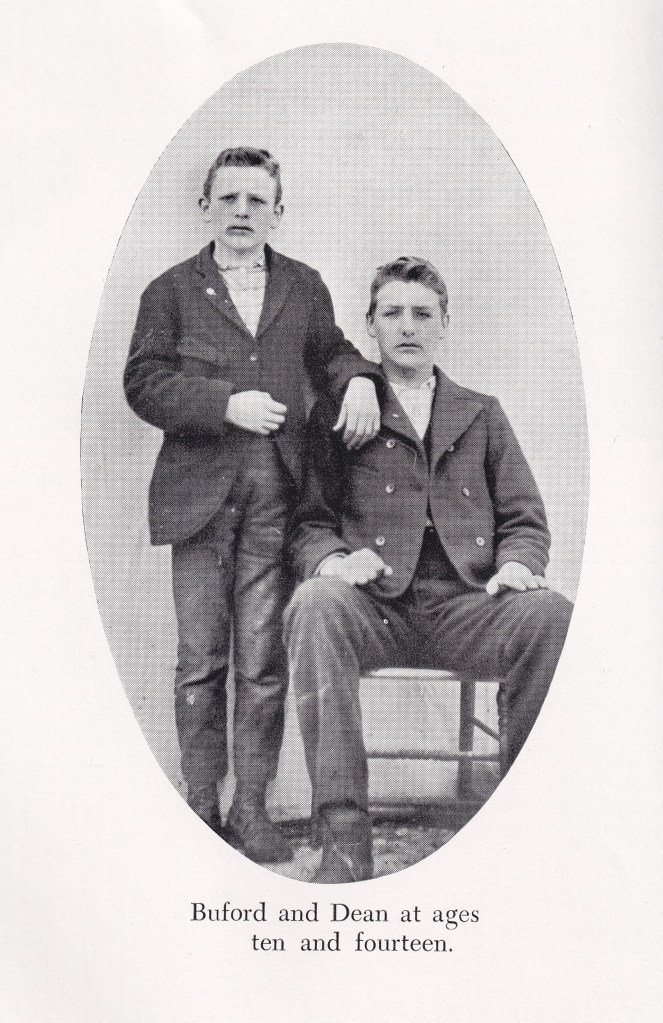
Dean Crain (seated) at age 14 with Buford Crain (standing) at age 10 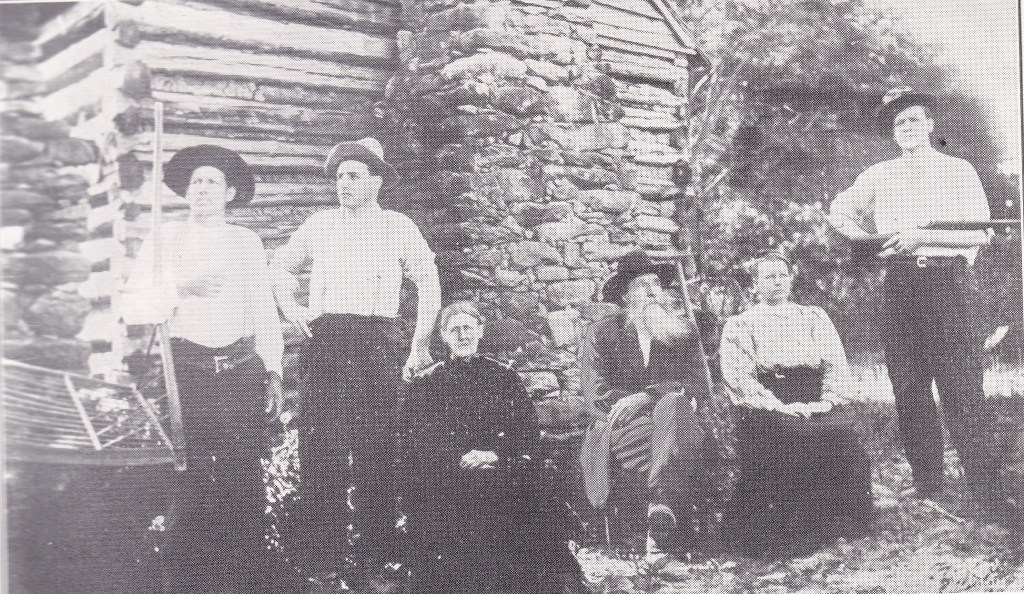
Shade, Dean, Mrs. Crain, Mr. Crain, Minnie, and Buford at their home 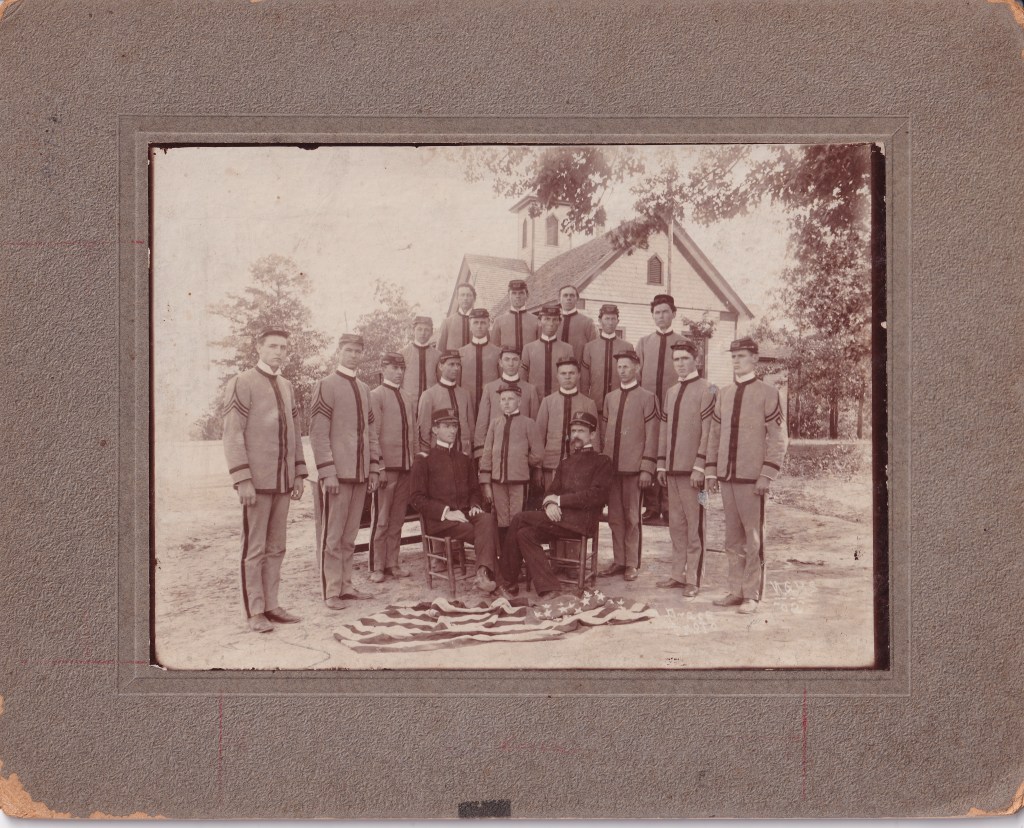
Dean Crain (far left) at North Greenville High School in 1902 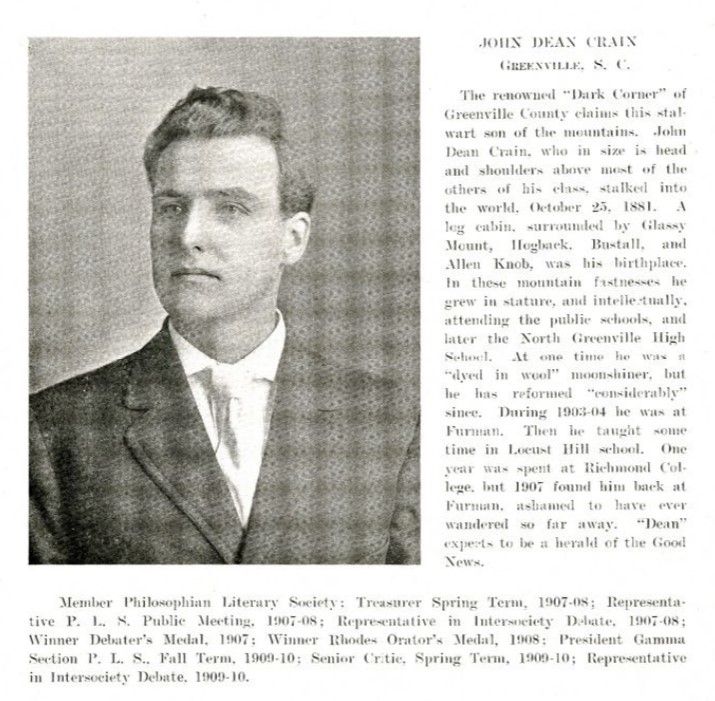
Dean Crain’s Senior Yearbook page at Furman University in 1910 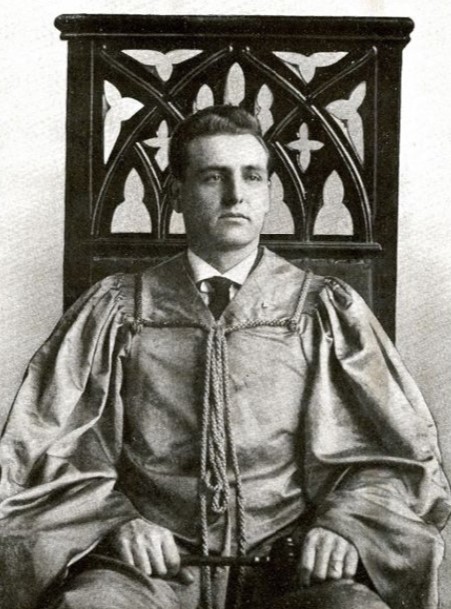
Dean Crain in 1910 as President of the Gamma Section of the Furman Philosophian Literary Society 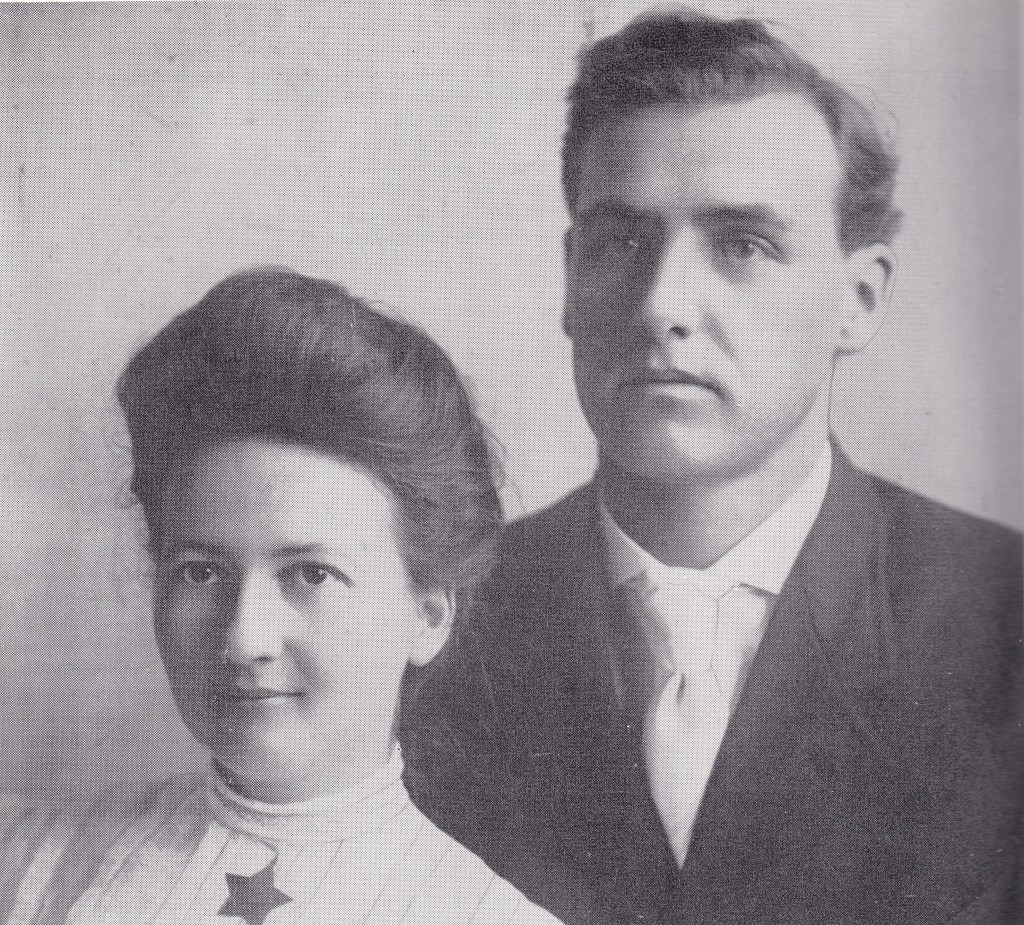
Dean and Ellen in 1908 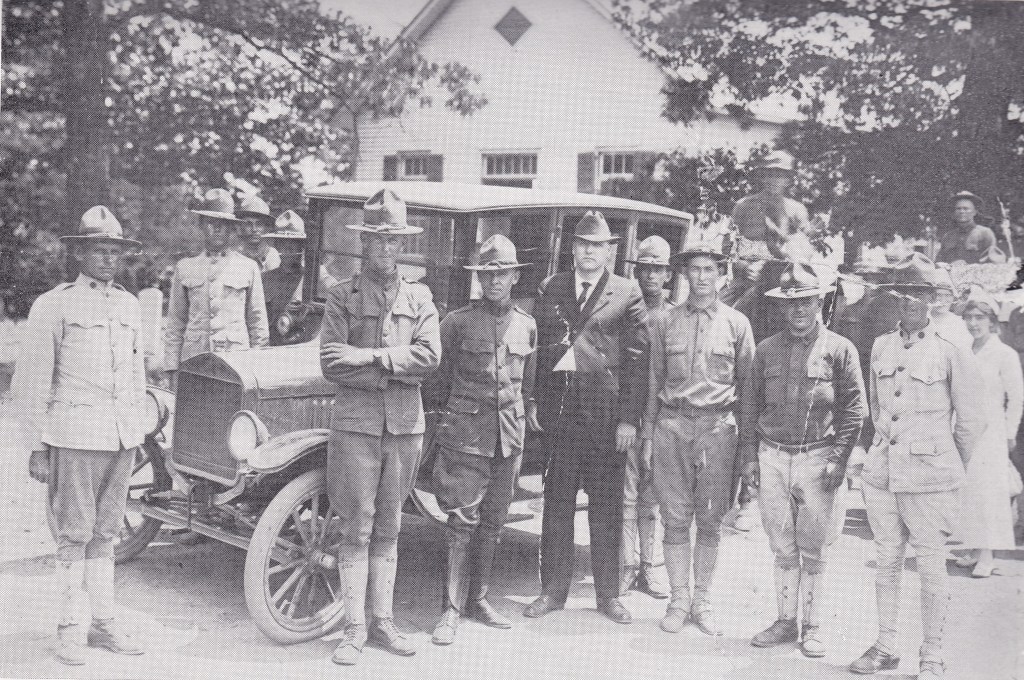
Dean with soldiers with a group at Camp Sevier during WWI 
E. Buford Crain and J. Dean Crain in 1937
 From These Roots
Leave a comment