

In 1947, the first science building was added to the North Greenville campus. After World War II, the federal government made surplus buildings available to college campuses. In addition to the former barracks set up as “Vetville”, North Greenville received a one-story building with 6,000 sq ft to be used as the first science building on campus. The original science building was located where Howard Hall is today and had space for three lecture rooms including one each for biology, physics, and chemistry. Each class also had a separate laboratory. Before the army surplus building, science classes took place in multiple places. The biology class met in the old administration building, the chemistry class was under the back of the old auditorium, and the home economics classes were in a room at the back of the stage in the old auditorium.
While the original science building was a great addition when it was added, it was never meant to last. The accrediting board of The Southern Association of Colleges and Secondary Schools let the North Greenville administration know that the school’s further accreditation may be in trouble if the science building was not replaced. In 1960, plans began for a new, modern, science building to replace the old army surplus building. Lillard, Westmoreland, and McGarity were chosen as the architects for the building project and the estimated cost was $250,000. The board of trustees began accepting bids for the construction in 1961 and the winning bid of $233,297 came from Chas. J. Craig Construction Company from Columbia, SC.
The location chosen for the new science building meant that Taylor Hall, the old boy’s dorm, would need to be torn down. Once Taylor Hall was removed, construction began on the science building. A groundbreaking ceremony was held on May 6, 1961. The building was constructed on a slope so that both floors could be accessed from ground level and a greenhouse was included for the biology department. A brick lattice wall was added to the front and back of the building to cut down on direct sun rays without blocking the view from the inside. The first floor contained the Home Economics Department with a kitchen, a sewing room that doubled as a banquet hall for 100 people, and a storage room for textbooks. The second floor housed the math and science departments, labs, classrooms, an auditorium-style lecture hall with seating for 104 people, and faculty offices. Once equipment and furniture were added, the final price tag was $310,000. The architecture firm that designed the building ended up winning second place for their design in a contest by The South Carolina Chapter of the American Institute of Architects.
In February 1962, classes began to meet in the science building. The old science building was used for storage until it was torn down in 1963 to make room for Howard Hall. 1963 was also the year that the trustees approved the science building to be named “The Crain Science Building” after J. Dean Crain. Dr. Crain was a North Greenville alumnus who came back to serve as principal. He eventually became a state evangelist, pastor, minister to inmates, and vice president of the Southern Baptist Convention.
After the 1965-1966 academic year, the Home Economics Department at North Greenville ended. The reason is unclear, but Mrs. Dill, the longtime Home Economics teacher retired around this time so that probably factored into the decision to end the program. With the end of Home Economics, the bottom floor of Crain was eventually renovated and turned into classrooms.
Around 2000, some renovations were done in Crain. The Mass Communications Department moved into the building where part of the Home Economics area once was. This area included offices and a broadcast room for the student radio station. Mass Communications would stay in Crain until their new area opened in the Todd Dining Hall/Tingle Student Center in 2005/2006. During this renovation, the area that once held a projection room for the Science Building Auditorium was converted into two tiny faculty offices. Other areas of the building were converted to make space for a dean’s office, a dean’s secretary’s office, and additional faculty offices. The dean’s office would move into the area that was once the Mass Communication Department once they moved into their new building in 2005/2006.
Very few campus pranks have made it into the student newspaper over the years, but The Crain Science Building was the scene of one of those pranks. In the spring of 2004, students entered the locked building by possibly using a ladder and going in through the courtyard. The students then proceeded to take every desk out of every classroom and pile them up in the courtyard. When faculty arrived the next school day, there were no desks in the classrooms. Thankfully, none of the desks were damaged and the students who had morning classes in the building just had to go get their own desks out of the courtyard.
Throughout the early 2000s, the courtyard area was used for various things. At one time, it was used as storage, but a student effort in the early 2000s pushed for it to be revitalized. There was a large pink dogwood tree, a Tree of Heaven (Ailanthus altissima), and various bushes (butterfly bush and others). Dr. Jeff Brotherton grew a 40-pound pumpkin over the summer months of 2008 and Biology students kept tortoises in the courtyard.
In 2009, new faculty offices were constructed by reducing the size of the chemical storage room and converting the former Dean’s office. In 2010, the courtyard area was closed off to provide new lab spaces for the Science Department. This incorporated a new upper-level chemistry lab that included up-to-date fume hoods, a biology laboratory, and research space. Over $150,000 was donated from corporations and individuals to fund the new space, and the Kavli Foundation was a major donor.
The biggest renovations to Crain came in 2012 and were originally intended to be in preparation for a new wing being added to the building. The outside of the building took on a new look when the brick lattice was removed. The Physics/Physical Science laboratory space was converted into new faculty offices. Two new hallways were created from existing classrooms/labs from the east hallway for access to the planned adjoining building. A new office suite was created for the Dean. Originally, each entrance had a double set of doors, but this renovation removed the inner set from each entrance so that only one set of doors was at each entrance. A new entrance was also put into the first floor. A cadaver room was created, but it was never used and soon converted into another classroom. In preparation for the new addition to Crain, all of the windows on the west side of the building were removed. A Snorkle ventilation system was added to the first-floor biology lab. The bathrooms were extensively remodeled, the HVAC was redone, the plumbing was updated, all new electrical wiring was added, and some new outlets were installed. The classrooms received overhead projectors and screens and new prep rooms were added for the Chemistry and Biology labs. The auditorium was also renovated and extended by taking out the two tiny faculty offices.
The addition has not been added to Crain as of the writing of this post.
Do you have any memories of the Crain Science Building? We’d love to read about them in the comments!
We’d like to give special thanks to Dr. Ronald Marks for his help with this post. The Crain Science Building renovation pictures were provided by Dr. Marks. We’d also like to thank Steven Guersch for providing the current pictures of Crain.
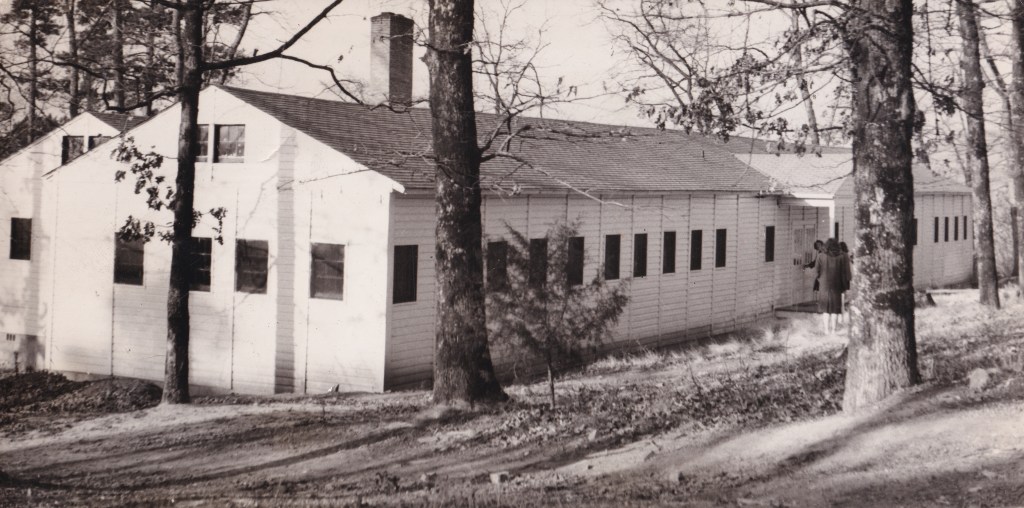
The original science building prior to Crain 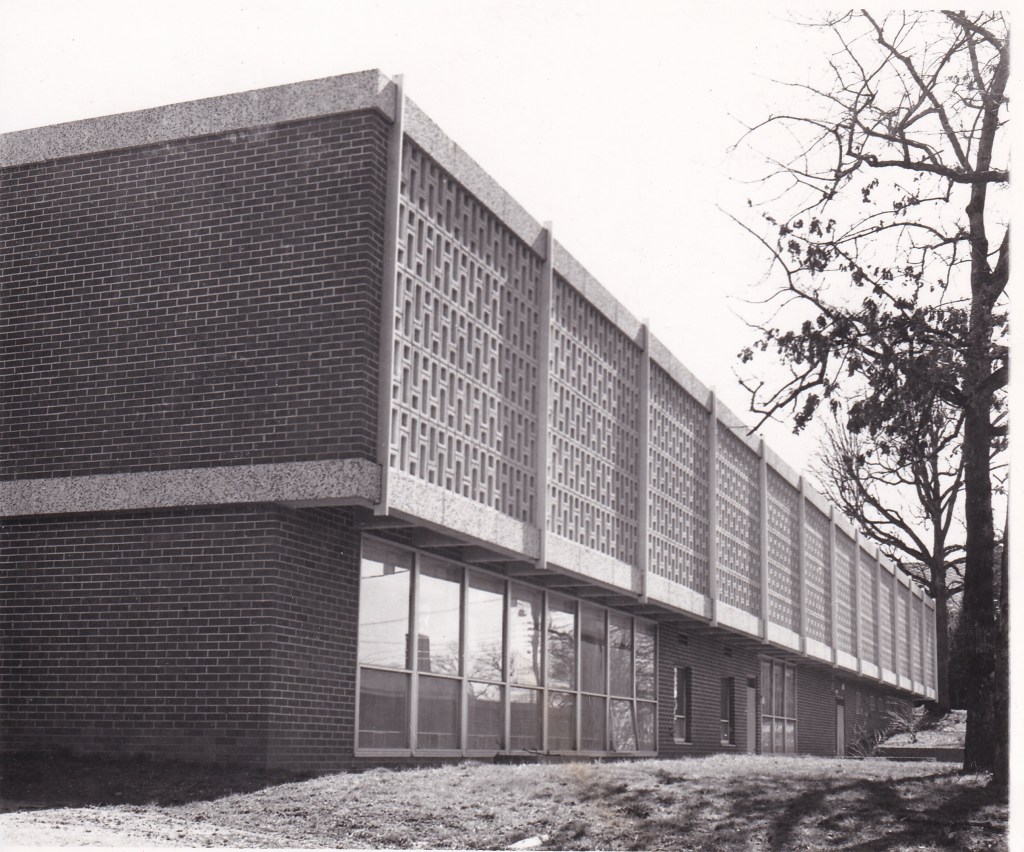
Crain Science Building 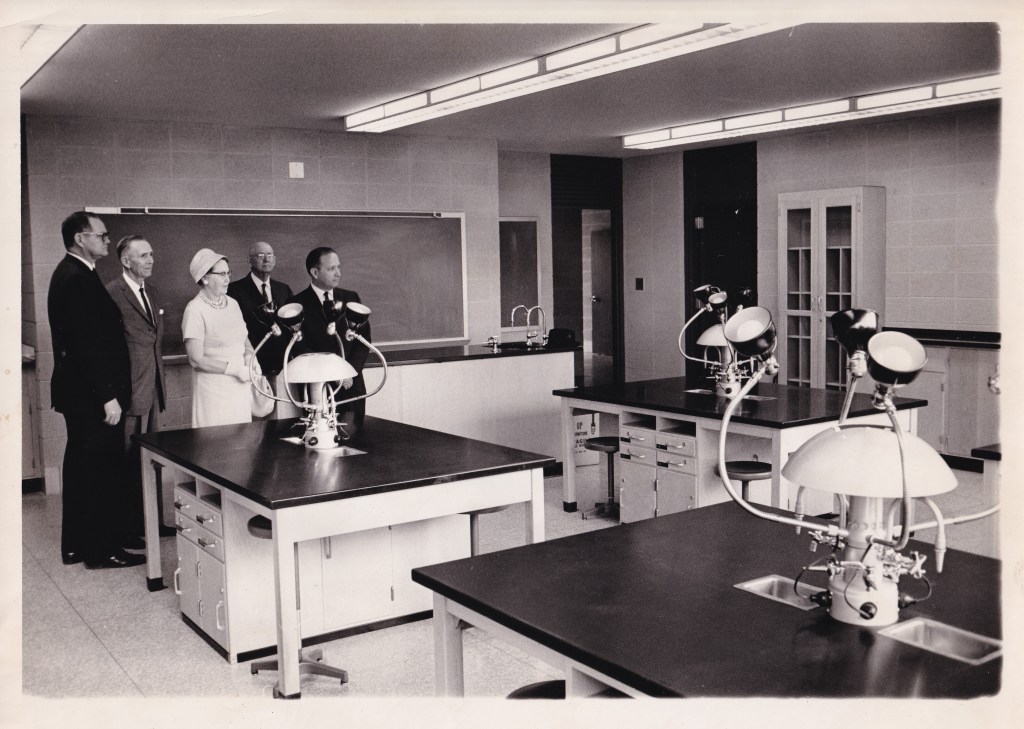
A Crain Science Building Lab in 1962 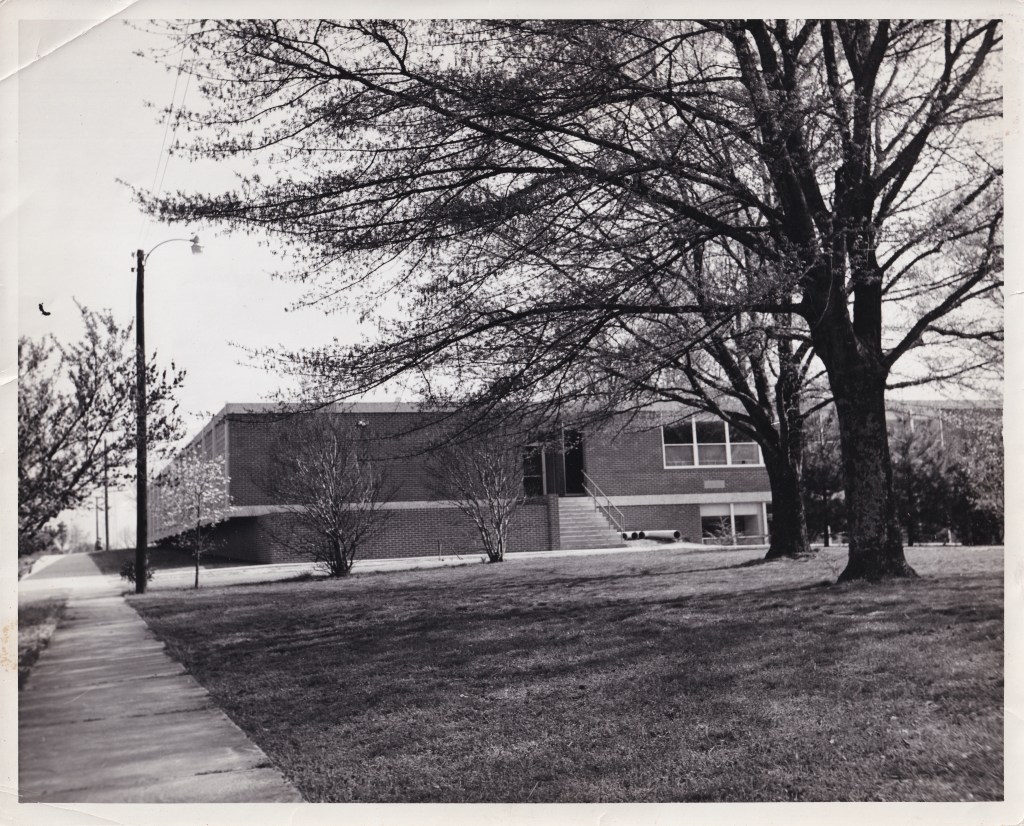

The Crain Science Building 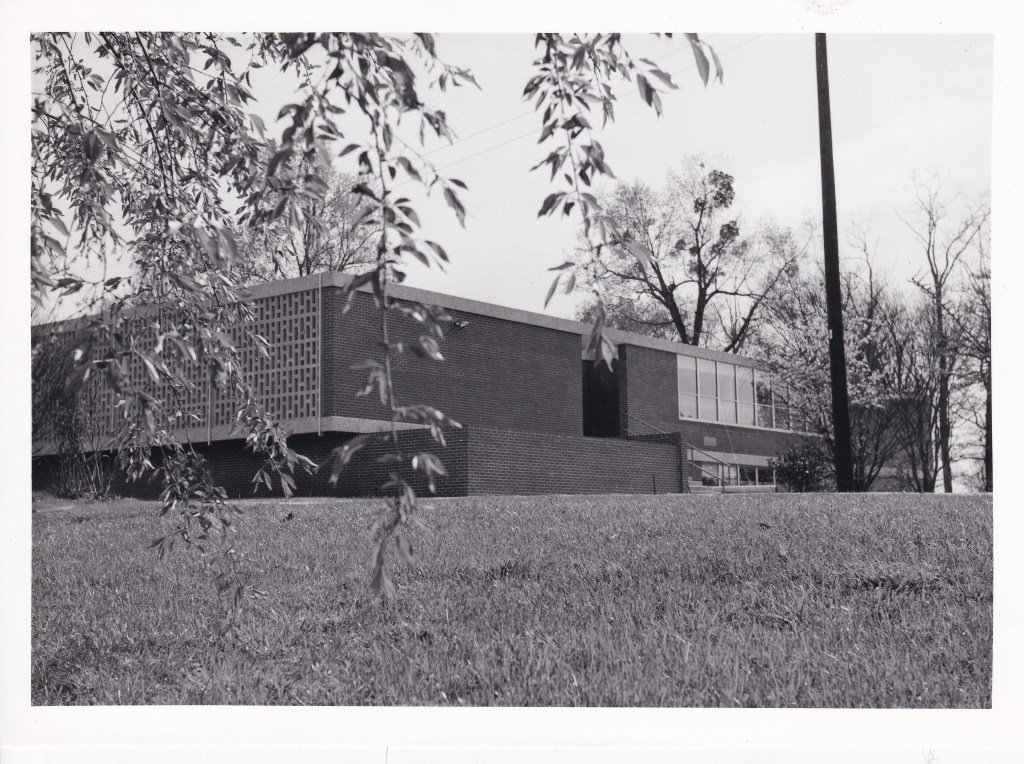
The Crain Science Building 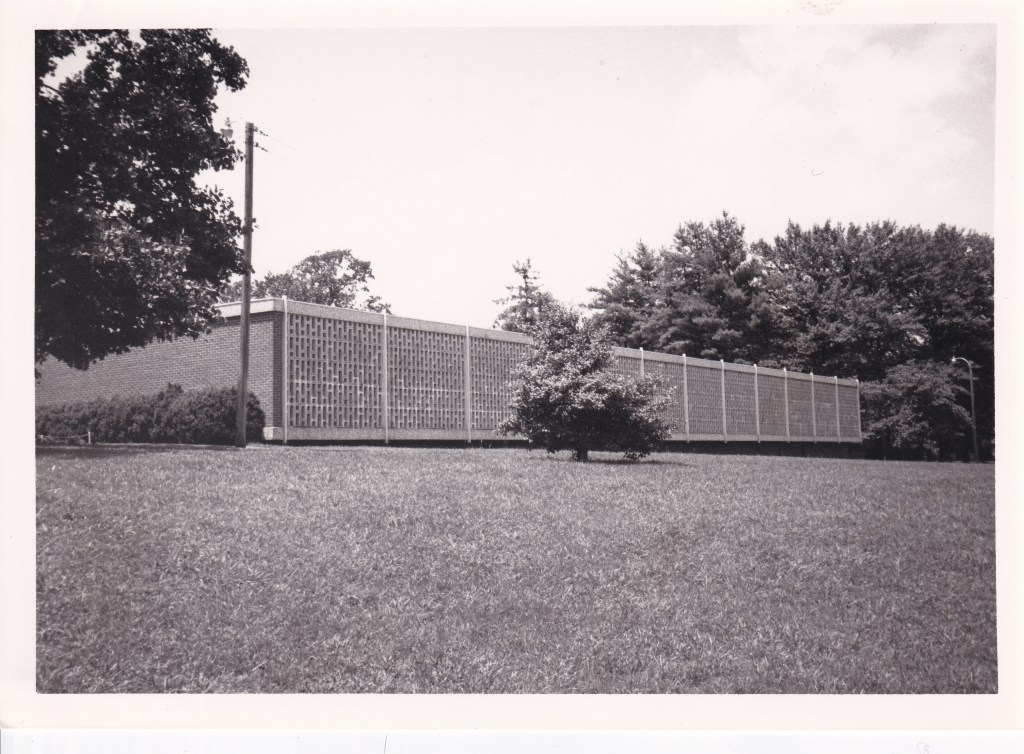
The Crain Science Building 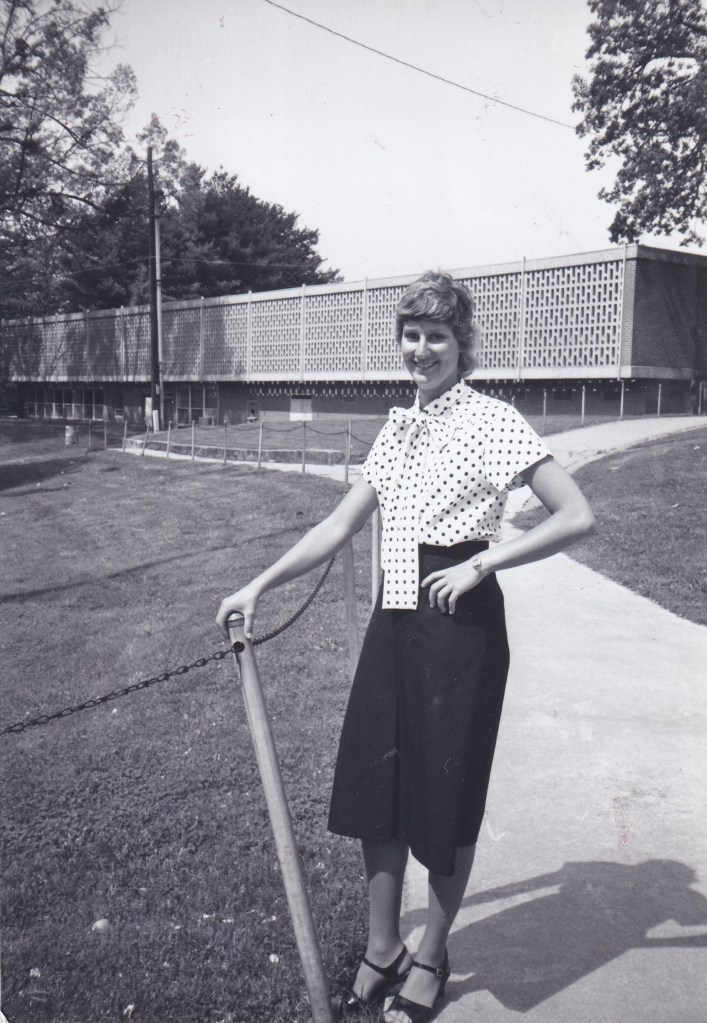
Jayne Arledge in Front of Crain 
The Crain Science Building in 1995 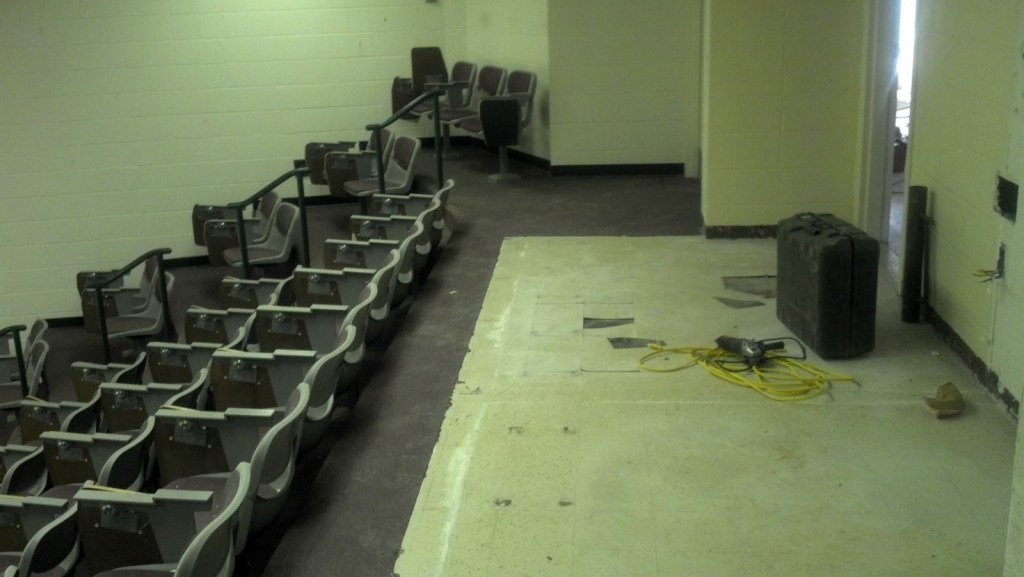
The auditorium during renovations. The two small faculty offices were removed to expand the seating capacity of the auditorium. 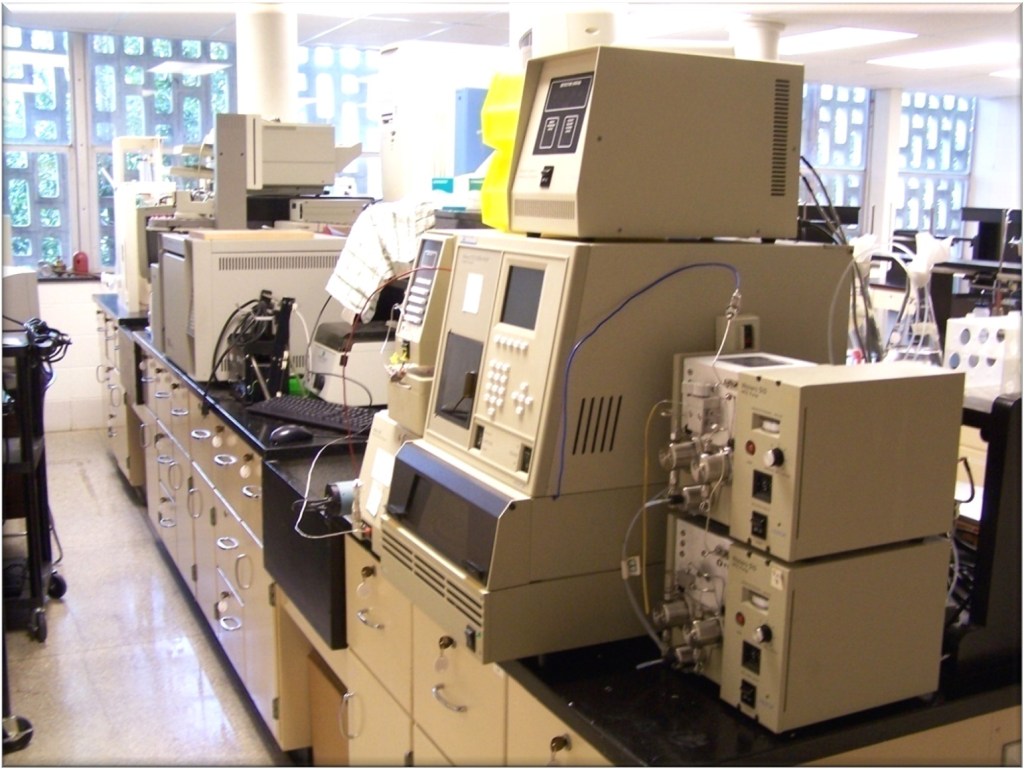
The Chemistry Lab before renovations. This space was used for chemistry instrumentation and research before the new central lab was constructed. 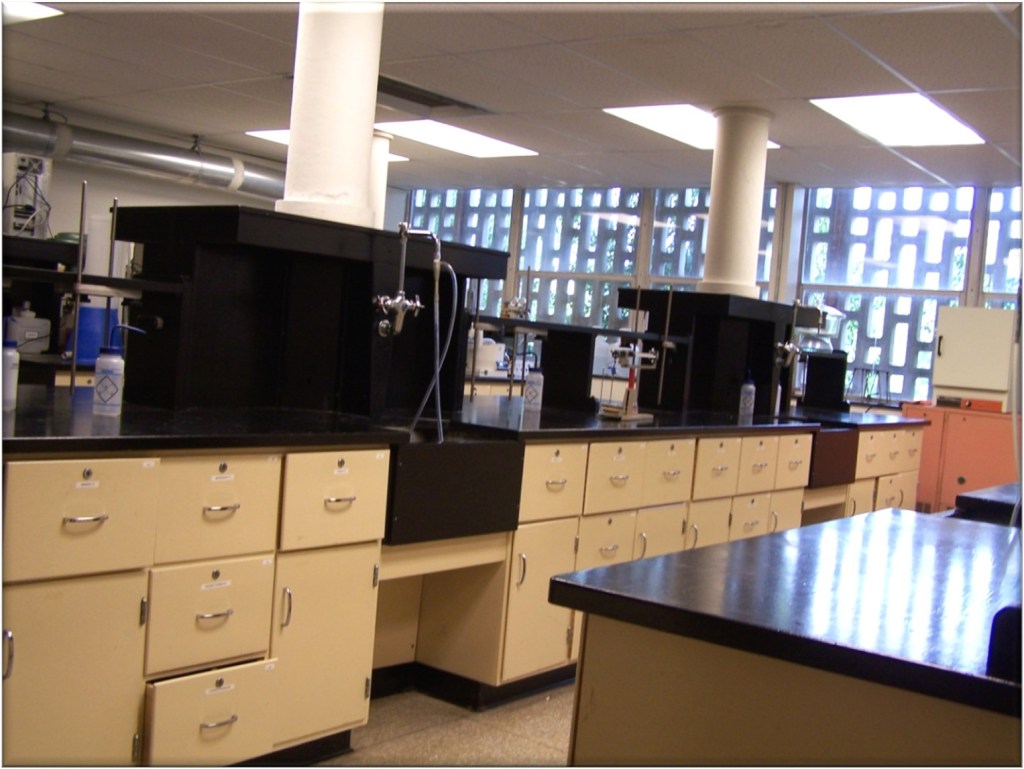
Another view of the chemistry lab before renovations. You can also see the brick lattice work through the windows. 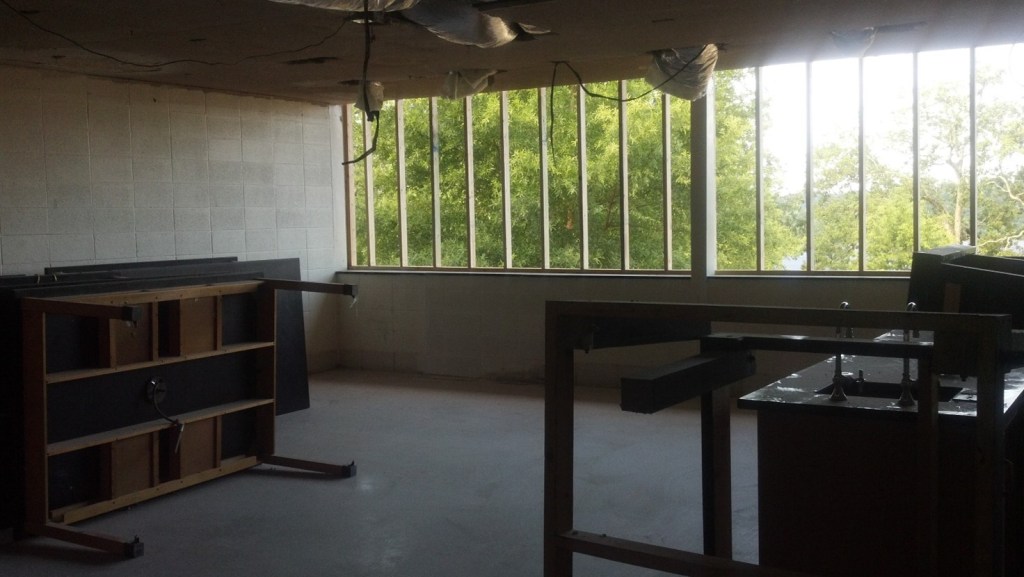
One of the classrooms during renovation. The windows were removed and a wall was put in place in preparation of the planned new wing. 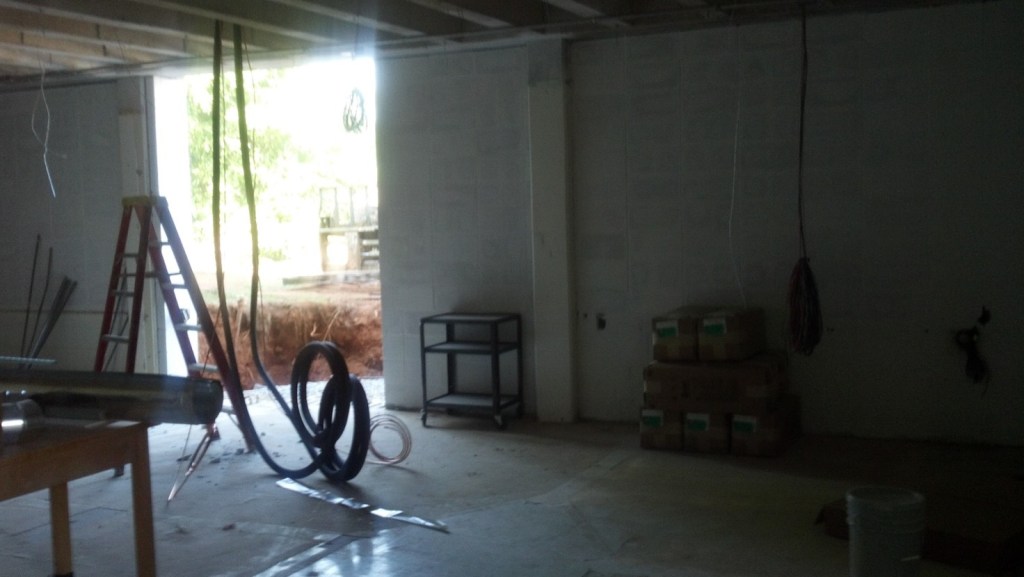
First floor renovations. The large opening was for access to the anticipated adjoining new building at the first floor level. This is currently a wall separating faculty offices in that area. 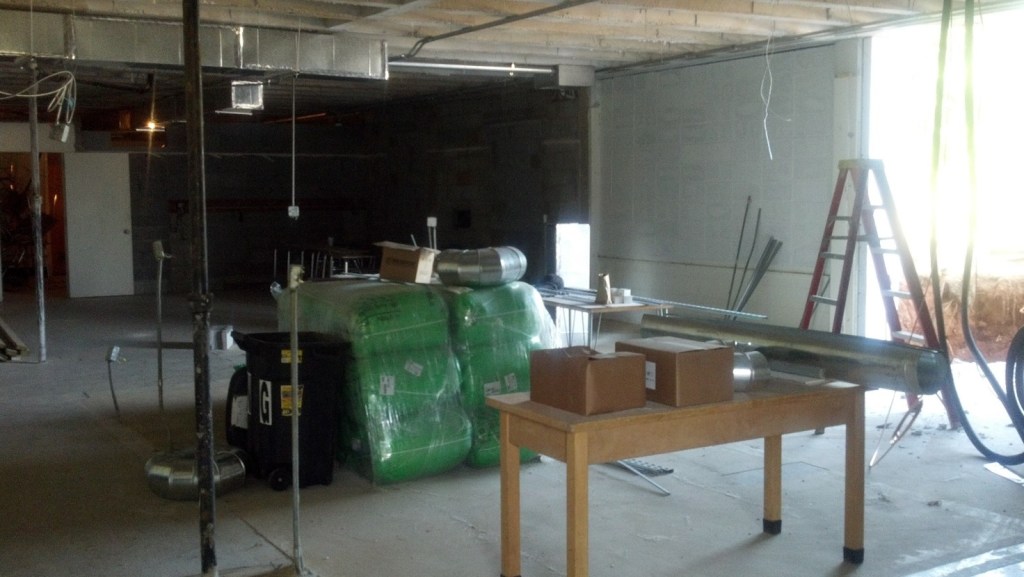
First floor renovations. This space is now faculty offices and a classroom. 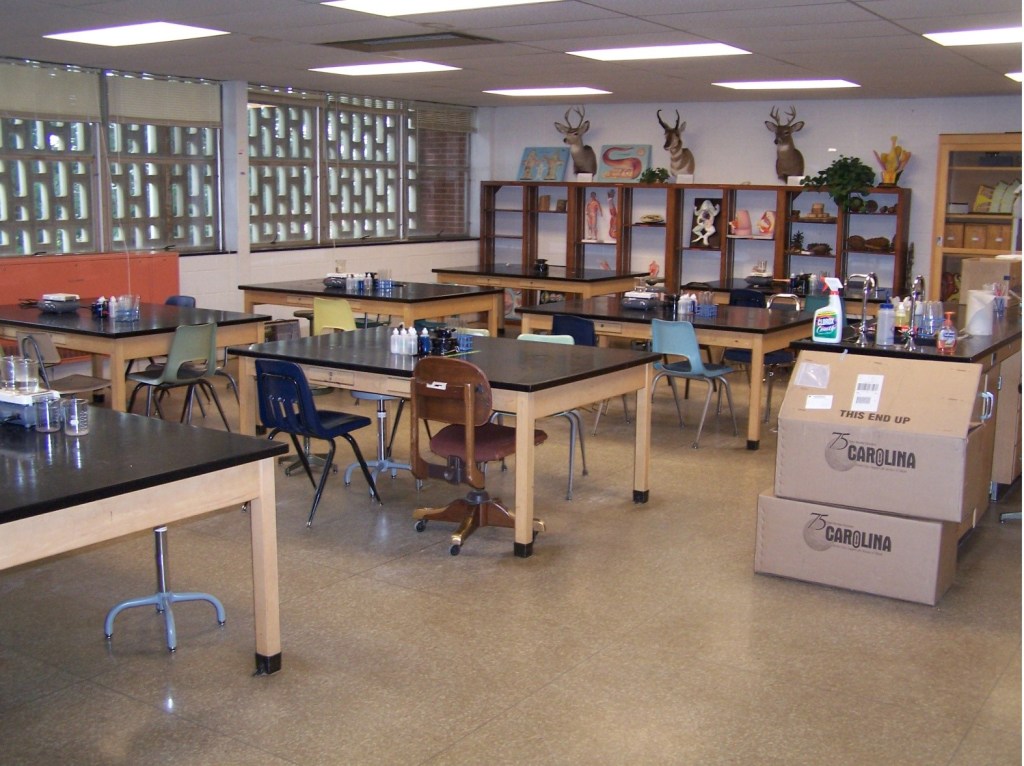
Original biology lab in northwest corner of building. This lab was reduced in size to add a new faculty office and hallway to the planned new building that was to be build on the west side of Crain. 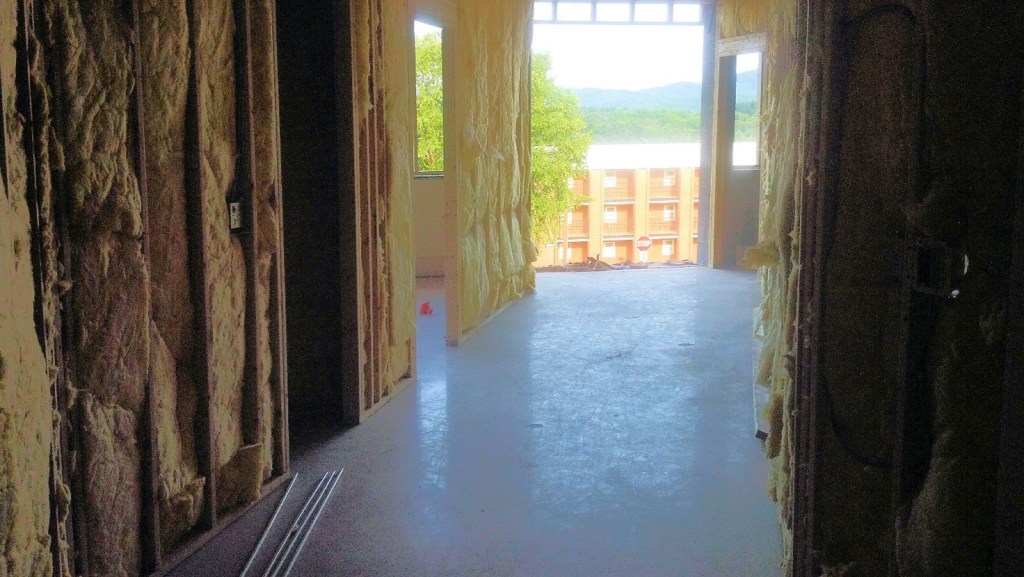
New north hallway leading to opening for anticipated adjoining building (wing). Bruce Hall is seen through the opening. To the right is a new, smaller lab space. The far door is a new faculty office and the near door a new storage room. 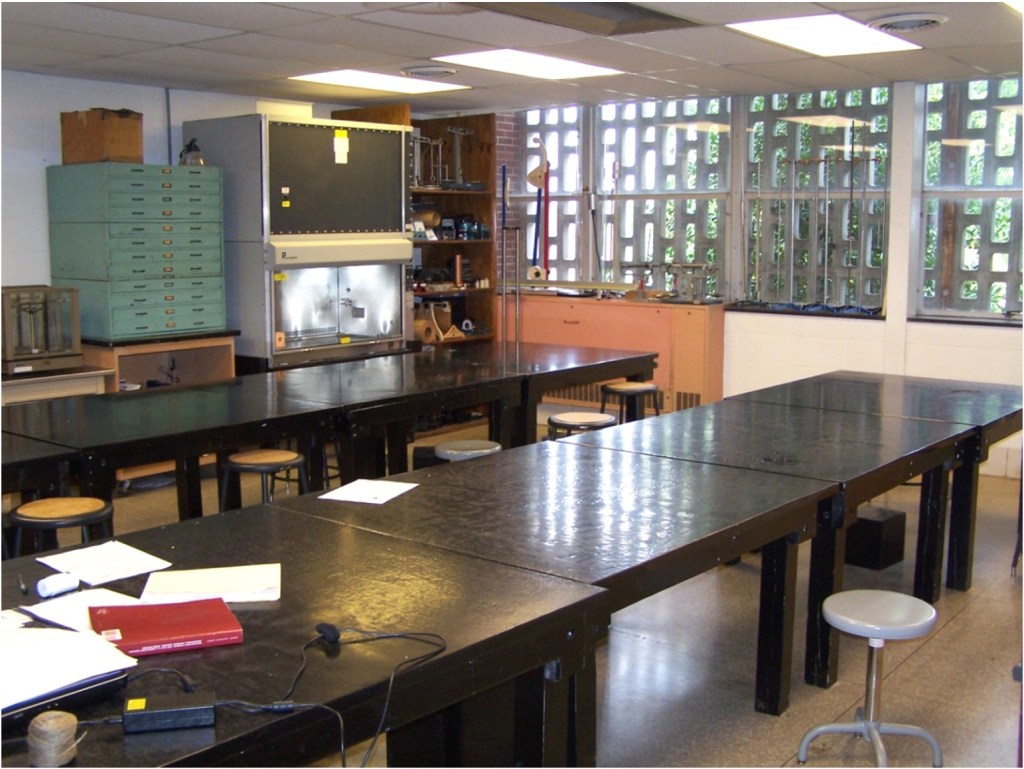
The Physics and Physical Science laboratory. This room was converted to faculty offices during the 2012 renovation. 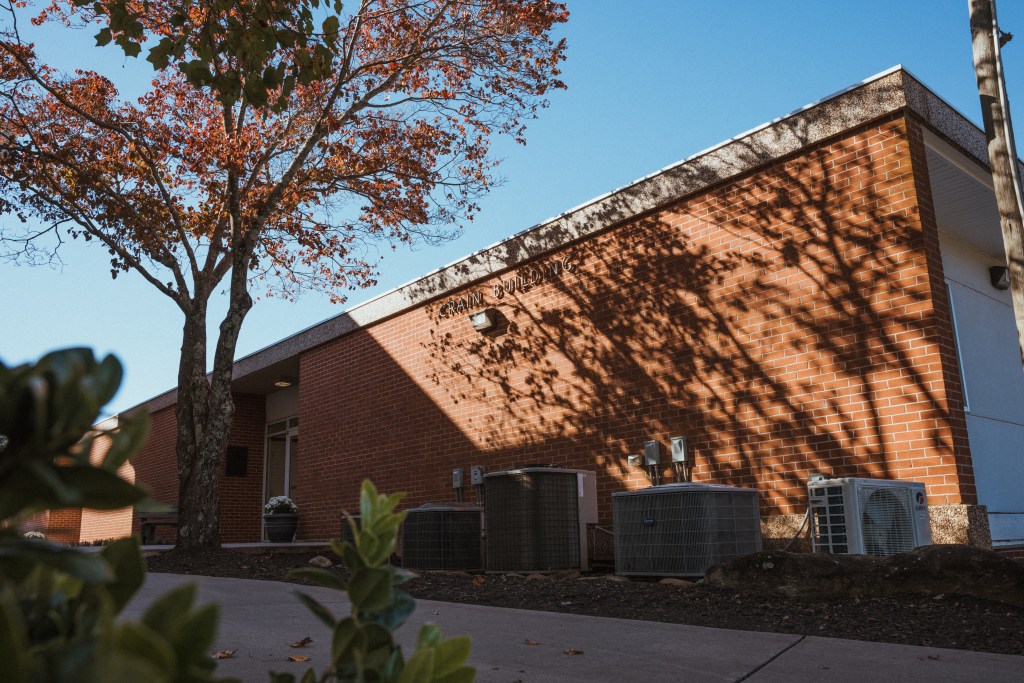
The Crain Science Building Today 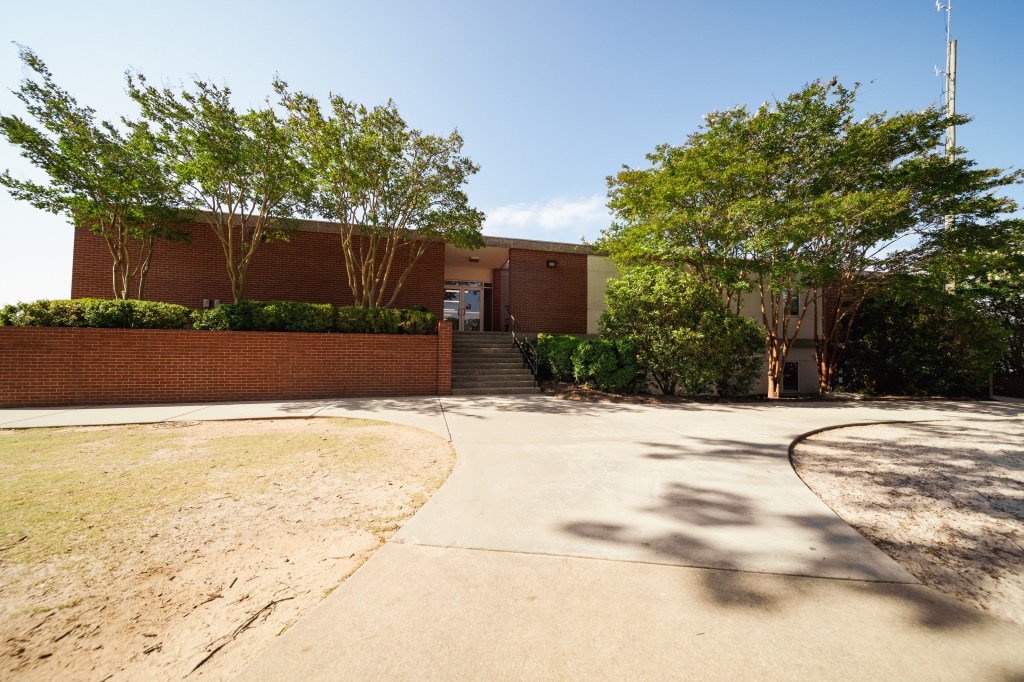
The Crain Science Building Today
 From These Roots
Leave a comment