
Alex Kinlaw, Jr. grew up in Georgetown, SC as the son of Alex Kinlaw, Sr. and Corinne Giles Kinlaw. His dad was an AME minister and Judge Kinlaw grew up attending church and singing in the choir. His parents only had an 8th and 9th grade education and no one in his family had ever earned a bachelor’s degree. When he was ten, he went with his mom to a lawyer’s office. While he sat in the waiting area, he saw carpeted floors and felt air conditioning for the first time. Meeting the lawyer made an impact on him and when they left the lawyer’s office, he asked his mom what that man did for a living. She told him that he was a lawyer and that lawyers helped people. Judge Kinlaw asked his mom if he could be a lawyer someday and she replied, “You can be anything you want to be!” From that day forward, Judge Kinlaw was determined to become a lawyer. His parents and others in the community saw the potential in him and supported him along the way.
His first job was at Tomlinson’s Department Store where he began as a window washer. One day, he was asked to fill in as a salesperson because they were short-staffed. He proved himself by having the most sales of anyone working that day and was promoted to salesperson. When he was getting ready to graduate high school, the manager offered him an assistant manager position at another store. However, Judge Kinlaw decided to stick with his dream of becoming a lawyer and turned down the position to attend college.
Judge Kinlaw was an honor student attending Howard High School when desegregation came to Georgetown. At Howard High School, Judge Kinlaw knew he had to have a great GPA to earn the scholarship money to attend college. He was self-motivated and focused on his future so he sat in the front row of class to avoid distractions. His dream was to be the valedictorian and he was on his way to accomplishing that goal when the process of desegregation had him transferred to Winyah High School. There was a girl at Winyah High School who had a GPA similar to Judge Kinlaw’s so the school decided to make them co-valedictorians. It was not quite what his dream had been, but he still accomplished his goal.
He attended college at the University of South Carolina and nearly dropped out during his first year. In his freshman English class, he wrote a paper about what he wanted to do with his life and his career. When the professor read his paper, she told him that he would need to be a much better writer to be a lawyer. Discouraged, Judge Kinlaw went to see his advisor, Willie Harriford, who was the first African American dean at USC. Mr. Harriford handed Judge Kinlaw a phone book and told him to look up the number for the Greyhound Bus Station. Judge Kinlaw found the number and asked Mr. Harriford why he had given him that task. Mr. Harriford told him to call the bus station and see when the next bus to Georgetown was leaving. He told him that if he was going to believe what that professor told him then he might as well take a bus back to Georgetown because he didn’t belong there. In doing this, Mr. Harriford taught Judge Kinlaw that he couldn’t let other people define who he was or tell him what he could and could not accomplish. From that point on, Judge Kinlaw refused to let anyone discourage him.
During his time as an undergraduate student at USC, Judge Kinlaw was a charter member of the black fraternity Theta Nu chapter of Alpha Phi Alpha. He was also involved with the debate team, intramural sports, some political campaigns, and Big Brother Big Sister. He earned his Bachelor of Science degree in Political Science and Public Administration in 1975.
Judge Kinlaw was accepted into several law schools including NYU and NC Central Law School but decided to stay at USC. Unlike NYU and NC Central, his acceptance into USC was conditional due to his LSAT score. He was told that he had to do well in his first semester to continue in the program. When his mom read the conditional acceptance letter, she put on her Sunday best and took Judge Kinlaw to see the dean of the law school. She told him that her son would “do his lessons” and stay out of trouble if they gave him the chance. They gave him the chance, and Judge Kinlaw succeeded. During his time as a law student, Judge Kinlaw served as an intern at the Post-Conviction Relief Division of the South Carolina Attorney General’s Office and the South Carolina Criminal Justice Academy. He was also the Vice President of the Black American Law Students Association. He graduated from the USC School of Law in 1978 and passed the Bar exam that same year on his first attempt. His journey to become a lawyer came full circle when, shortly after graduating, he went with a friend to visit a lawyer. The lawyer his friend was visiting turned out to be the same man who had inspired the 10-year-old Alex Kinlaw to become a lawyer.
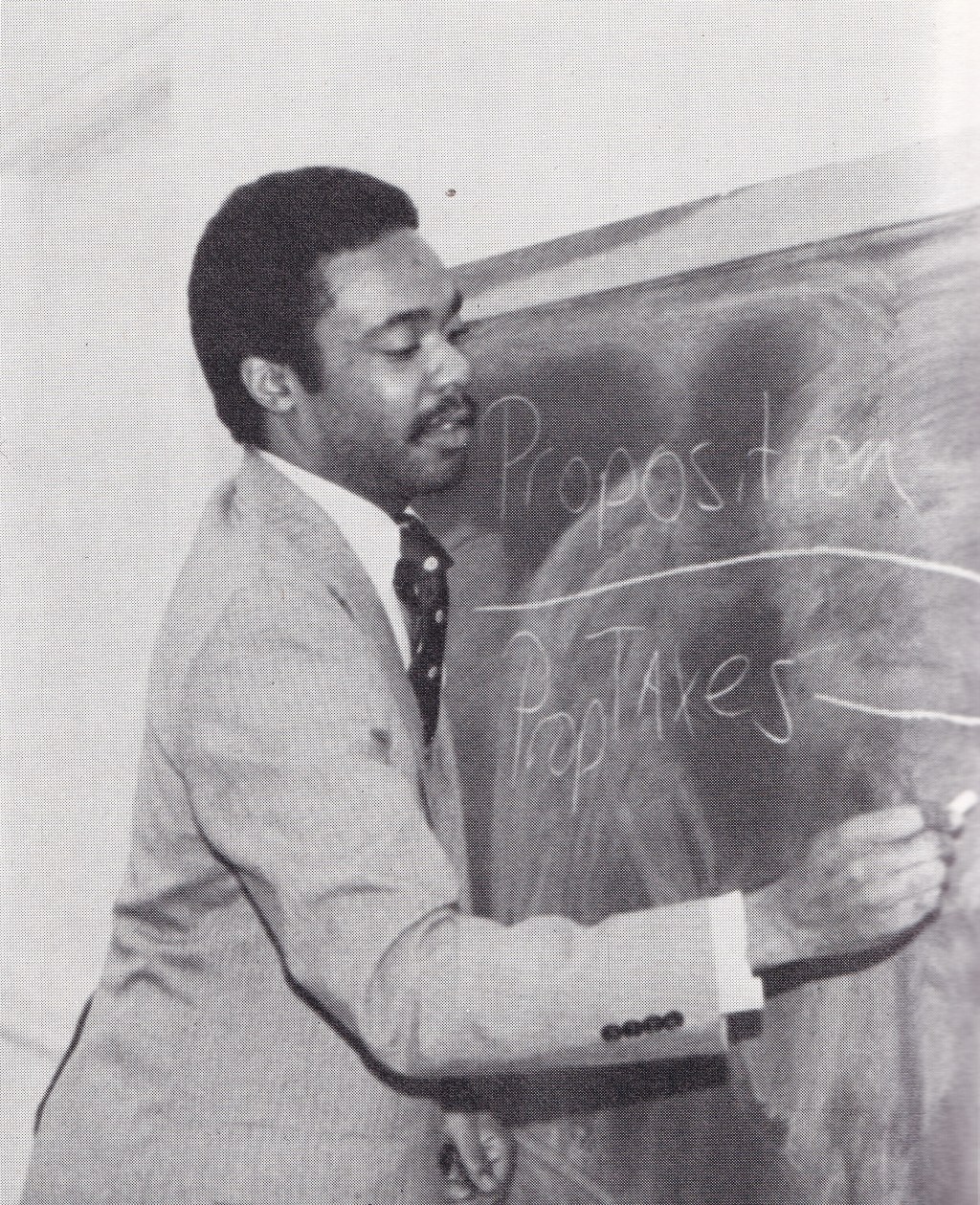
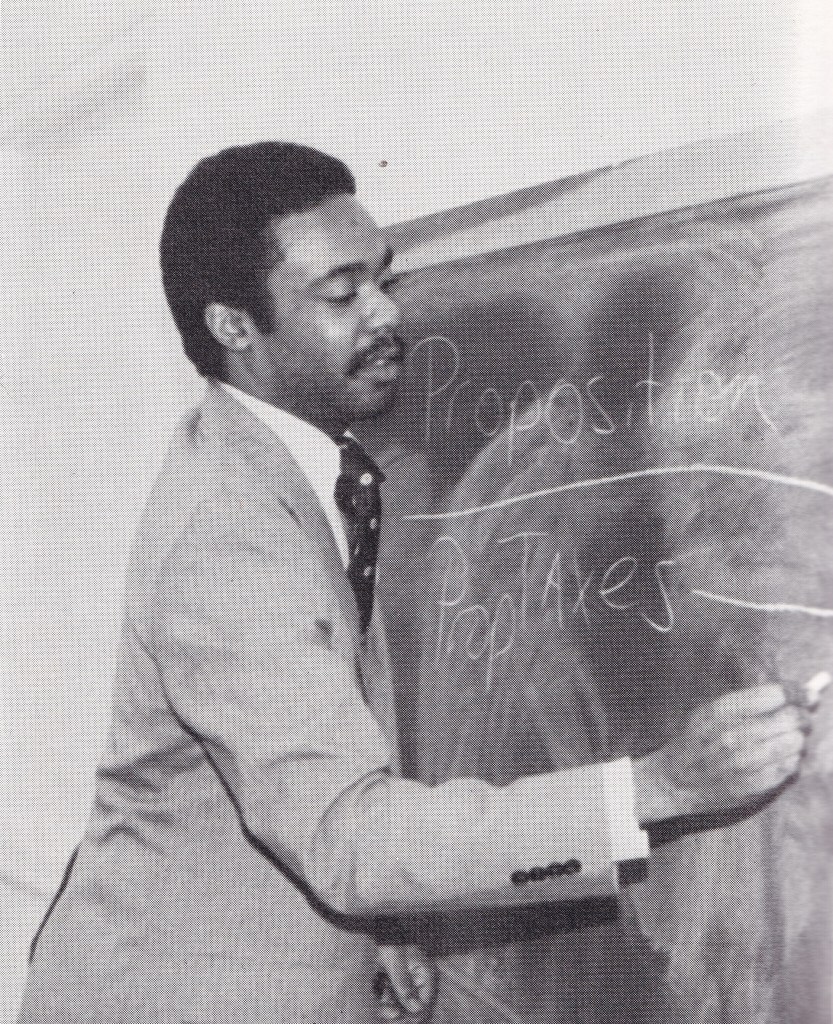
After law school, Judge Kinlaw took his first job in Washington D.C. as an intern with the SEC (Securities and Exchange Commission). He did not stay in Washington D.C. long before moving to Greenville, South Carolina to take a position with a legal services agency. It was around this same time that Judge Kinlaw took a job as a professor of government and history at North Greenville Junior College. He had never heard of the school before, but an acquaintance told him about the position, so he applied. He taught at both the Tigerville campus and the extension center in downtown Greenville. He suspected at the time that he was the first African American professor at North Greenville, and he was correct.
Judge Kinlaw’s next legal job was with the public defender’s office in Greenville County. While in this position, he became death penalty certified and defended a few death penalty cases. After a year or two in the public defender’s office, Judge Kinlaw opened up a private law practice named Kinlaw and Allen which later became Kinlaw and Associates. His law firm was a general practice that did a little of everything except for tax law. One of the attorneys who worked for him in his private practice was Ike Johnson who is now a judge and a trustee of North Greenville University.
It was around this time in the mid-1980s that Judge Kinlaw met his wife, Yvette Wiggins Kinlaw, at a church. The couple has two sons together- Brandon and Alex Kinlaw, III. Brandon attended Liberty University and is a manager at Dick’s Sporting Goods in Greenville. Alex Kinlaw, III attended USC and is an attorney in Greenville. When the Kinlaws took Alex to college at USC, Judge Kinlaw discovered that his son had been randomly given the exact same dorm room he had been assigned his own freshman year.
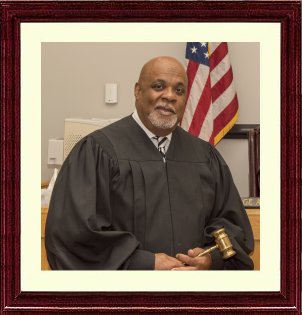
Throughout his career as a lawyer, Judge Kinlaw wanted to eventually be a judge. In 2009, Alex Kinlaw, Jr., officially became Judge Kinlaw when he was elected by the South Carolina General Assembly as a Resident Family Court Judge for the Thirteenth Judicial Circuit. He said the hardest part of this job was what to do with the children of the families who come through the court. It was not just the children with parents who needed to learn how to co-parent, but it was also the children whose parent or parents were in court because their parental rights were being taken away. After about nine and a half years in family court, Judge Kinlaw felt he had done all he needed to do in that role and wanted to move on to the next challenge.
In 2018, Judge Kinlaw was elected to the position of Circuit Court judge in the Thirteenth Judicial Circuit making him the first African American circuit court judge in Greenville County history. He has served in this role ever since and is set to retire at the end of this year. He keeps a picture in his office of the black lawyers who attended the 1954 NAACP convention in Spartanburg. He credits African American lawyers and judges who came before him like Matthew Perry, Willie T. Smith, Thurgood Marshall, Constance Baker Motley, and Donald Sampson as being his inspirations and many of them are in that 1954 picture. Their sacrifice and perseverance paved the way for men and women like him to follow in their footsteps.
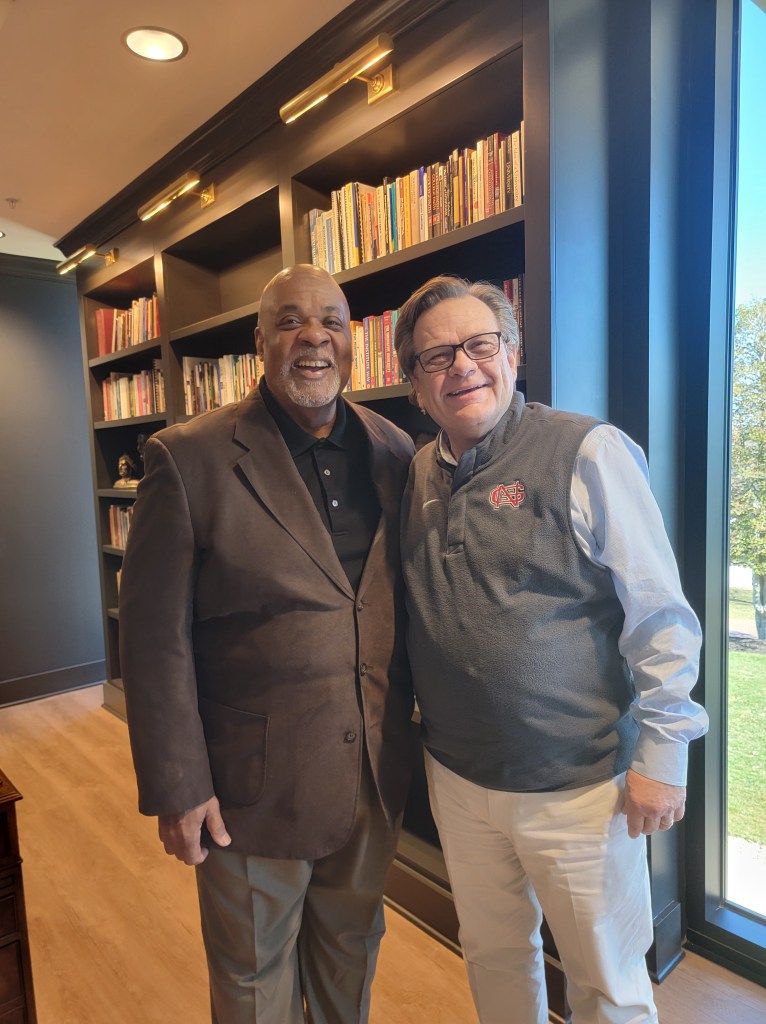
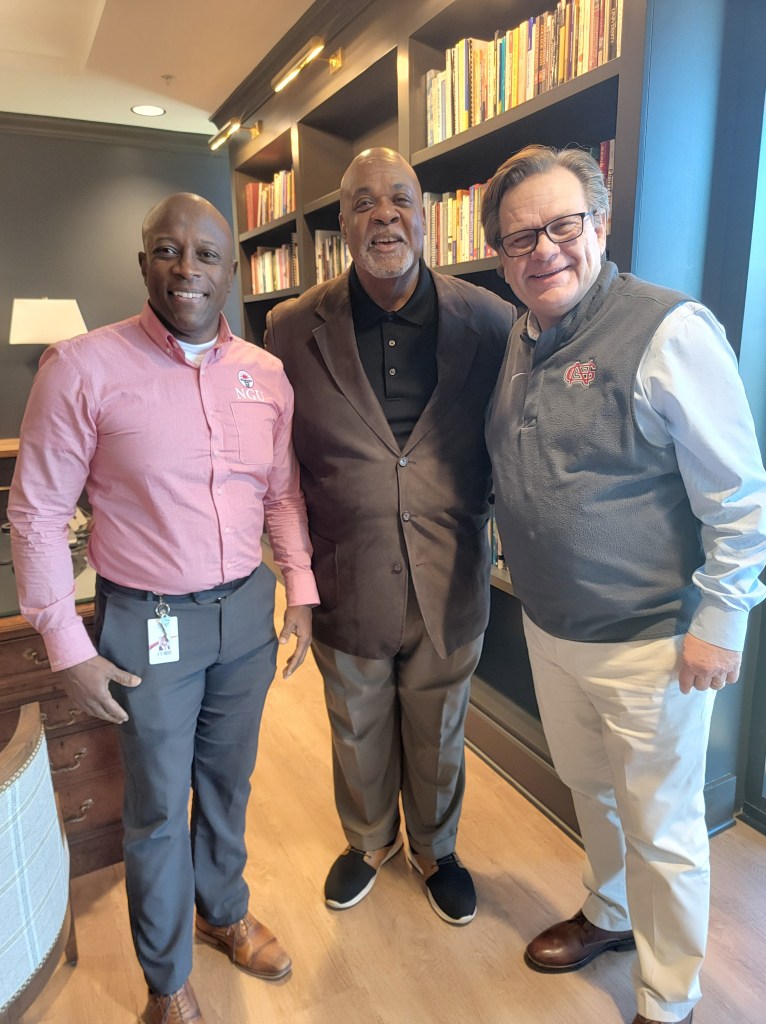
We’d like to honor Judge Kinlaw for paving the way for African American professors at North Greenville. Yesterday, he was kind enough to visit the campus and participate in an oral history interview. The stories he told Dr. Gene Fant (University President), Lamont Sullivan (Senior Associate Vice President, Alumni Engagement & Athletics Development), Dr. Paul Thompson (Dean, College of Humanities and Sciences), and Joanna Beasley (University Archivist) were informative and inspiring and we hope to have him on campus again soon.
 From These Roots
Leave a comment