
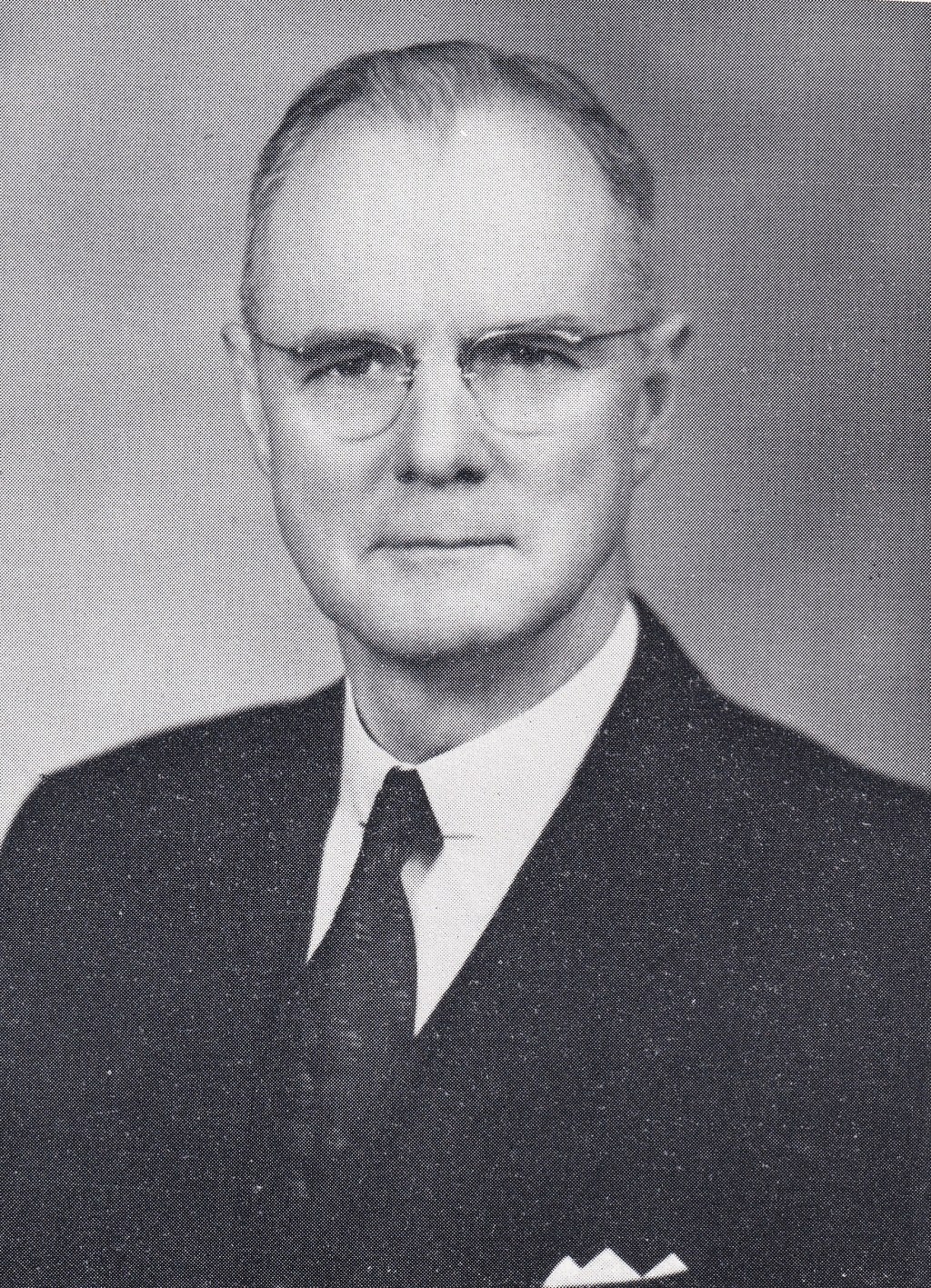
Leonard Kirklin Simpson was born to parents James W. Simpson and Cora Beeks Simpson on November 27, 1885, in Laurens County, South Carolina. Leonard was the oldest of five children and grew up on a farm in the Poplar Springs area of Laurens County. The Simpsons were devoted members of Poplar Springs Baptist Church, and two of the three Simpson brothers, Leonard and James, later became pastors. Leonard attended school as he was able to around farmwork and the schools he attended include Brewerton Academy, Poplar Springs High School, and Honea Path Graded School. When it came time for Leonard to further his education, he attended Furman University and graduated with an A.B. degree in 1910.
After graduating from Furman University, Mr. Simpson took a teaching position at North Greenville High School. Mr. Simpson and J. Dean Crain were college friends who graduated together from Furman so when Mr. Crain was offered the principal position at North Greenville in 1910, it is likely he asked Mr. Simpson to join him as a teacher. After two years as a teacher at North Greenville, Mr. Simpson was promoted to principal in 1912 after the resignation of J. Dean Crain. That same year, on May 5th, Mr. Simpson was ordained in his hometown by Poplar Springs Baptist Church. At this point, he was not sure if he was being called into full time ministry, but he accepted the pastorate at Mush Creek Baptist Church and served there for a few years before being called to pastor Locust Hill Baptist Church.
North Greenville thrived under the leadership of Mr. Simpson, but he had a lot of responsibility for such a young man. In addition to teaching, being the principal, fundraising, and managing the finances of the school, he was also in charge of the school farm. At the time, the Home Mission Board of the Southern Baptist Convention was helping North Greenville as one of its Mountain Mission Schools. The Home Mission Board had recently purchased a house and farm adjacent to the school property from the McKinney family. The purpose of the farm purchase was to help provide food and dairy products for the students, faculty, and staff. So, in addition to his principal duties, Mr. Simpson was also in charge of the farm. For the first time in school history, the farm gave students who could not otherwise afford it the opportunity to come to North Greenville and work for their tuition.
Mr. Simpson also thrived during his years at North Greenville because in addition to being ordained, he met his wife, Cora Long. Cora was a graduate of Greenville Women’s College (now a part of Furman University) and a teacher at North Greenville when the two met and fell in love. They were married on June 2, 1914, in a service conducted by the Rev. E.M. Poteat of Furman University. After they married, they lived for a time in the McKinney farmhouse on campus.
The school’s first yearbook, The Enlighteneer, was published during his first school year as principal. There would not be another yearbook for seven years so the 1913 Enlighteneer gives us a good insight into what life on campus was like in the 1910s. This yearbook also includes the only known full picture of the McKinney farmhouse.
Mr. Simpson had a vision for North Greenville that the school would not only help the northern part of Greenville County, but that it would help the whole state. To support this vision, he reached out to other local Baptist associations to try and get them to be affiliated with the school. During his time, both the Greenville Baptist Association and the Laurens Baptist Association became supporters of North Greenville. It was also under Mr. Simpson’s leadership that the name of the school changed from North Greenville High School to North Greenville Baptist Academy. The name change was to emphasize the Baptist ties and mission work of the school.
Mr. Simpson also had to lead the school through one of its biggest disasters on March 11, 1916, when the women’s dorm burned. One of the biggest campus events of the year was the annual E.Q.V. and A.C.H. banquet. The E.Q.V. and A.C.H. were the literary clubs on campus. The dining room where the banquet was held was in the basement of the women’s dorm so there was a lot of activity that day in preparation for the event. During the banquet, a fire broke out on the second floor of the building. It is believed that one of the irons that had been used by the women was put away hot and started the fire. Thankfully, the fire was spotted quickly enough so that no one was injured, but the building itself was a total loss.
While this seemed like a devastating blow to the school, God provided. The community rallied together to set up a temporary kitchen and dining area for the students. They also opened their homes to the men who had been displaced when they gave up their dorm for the women. The new women’s dorm, later named Wingo Hall, was quickly built and included a new kitchen and dining hall in the basement.
Mr. Simpson’s faith and his belief in the Chrisitan mission of North Greenville is also shown in the fact that Tigerville Baptist Church was officially organized in 1918 while he was principal. Originally named North Greenville Baptist Church, the church met on the campus of the school and nearly every student, faculty member, and staff member attended. The first pastor of the church, Luther B. White, also had close ties to North Greenville as a faculty member. White Hall was later named in his honor.
In 1919, after several years of preaching, Mr. Simpson felt certain that he was being called into full-time ministry. So, at the end of the 1918-1919 school year, Mr. Simpson resigned from his position at North Greenville to attend seminary at the Southern Baptist Seminary in Louisville, Kentucky. At his resignation, the North Greenville Baptist Association adopted the following resolution: “Resolved that we bear witness to the fine spirit in which Prof. L.K. Simpson has conducted the school during his administration as principal of North Greenville Baptist Academy, and that we express our pleasure with the growth and development the school has made under his regime.”
The Simpsons moved to Louisville in the fall of 1919 to begin their studies. While he was earning his bachelor’s degree in theology at the seminary, Cora took courses with the Women’s Missionary Union Training School. Mr. Simpson graduated with his bachelor’s degree in 1921 and immediately began work on a Master of Theology degree which he finished in 1922.
After finishing in Louisville, the Simpsons returned to South Carolina where Mr. Simpson accepted the pastorate at North Baptist Church in North, South Carolina. Mrs. Simpson continued teaching in local public schools while her husband pastored the church. The Simpsons remained at North Baptist Church until 1927 when Mr. Simpson accepted the pastorate at Simpsonville Baptist Church. During his time at Simpsonville, Mr. Simpson served as the moderator of the Greenville Baptist Association for seven years.
After fourteen years at Simpsonville, Mr. Simpson resigned to take a position at McCormick Baptist Church in 1941. McCormick was a larger community with only one Baptist church, so Mr. Simpson saw this as an opportunity to reach a larger field. During his time at McCormick, Mr. Simpson served as the moderator of the Abbeville Association for eleven years.
Throughout his life, Mr. Simpson kept ties with Furman University, his alma mater. He served as a trustee of the school for a total of twelve years. In 1945, Furman University awarded him with an Honorary Doctor of Divinity degree. Dr. Simpson was serving as a Furman University trustee in 1953 when he participated in the groundbreaking for the school’s new campus.
Dr. Simpson’s leadership in Baptist life moved to the state level in 1949 when he was elected as one of the 1950 vice-presidents of the South Carolina Baptist Convention. In 1952, Dr. Simpson was elected to be the 1953 president of the South Carolina Baptist Convention. Dr. Simpson won the position in a run-off election against Rev. R.P. Lamb of Greer, South Carolina. Dr. Simpson’s brother, Rev. J. H. Simpson, was re-elected as secretary of the South Carolina Baptist Convention that same year. J.H. Simpson later went on to set a record of 20 years as the South Carolina Baptist Convention (SCBC) secretary. J.H. Simpson also became the first brother of a former SCBC president to become an SCBC president himself in 1956. At Dr. Simpson’s keynote address at the convention in 1953, Dr. Simpson said that Christians faced a “gloriously bright and challenging future” and have the remedy the world needs in the Gospel of Christ.
Dr. Simpson retired from fulltime ministry in 1957 but continued to serve as an interim and supply pastor until his health declined in 1960. He spent the last few years of his life homebound. In 1963, North Greenville Junior College named the new women’s dorm in honor of Dr. Simpson. Dr. Simpson, due to poor health, was not able to attend the ceremony, but his brother, C.H. Simpson, attended in his place and unveiled the plaque to Simpson Hall. A few months after the naming of Simpson Hall, Dr. Simpson passed away on November 16, 1963, just eleven days shy of his 78th birthday. He is buried with his family in the Poplar Springs Baptist Church Cemetery in Ware Shoals, South Carolina.
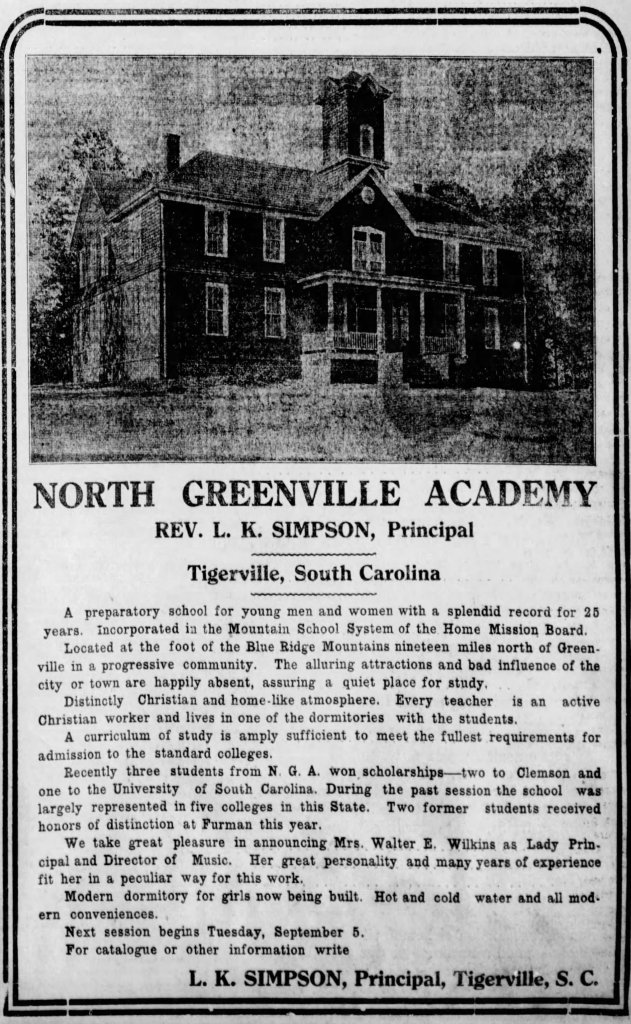
A 1916 ad of North Greenville Baptist Academy featuring L.K. Simpson as principal. 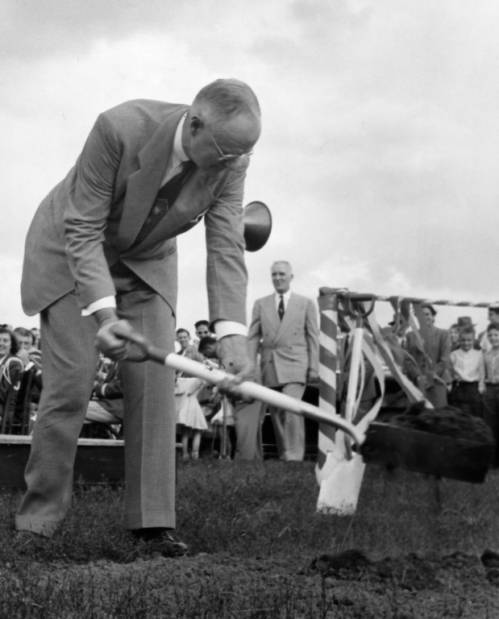
Dr. L.K. Simpson at the Furman University’s new campus groundbreaking. Photo Credit: Copyright Furman University Special Collections and Archives 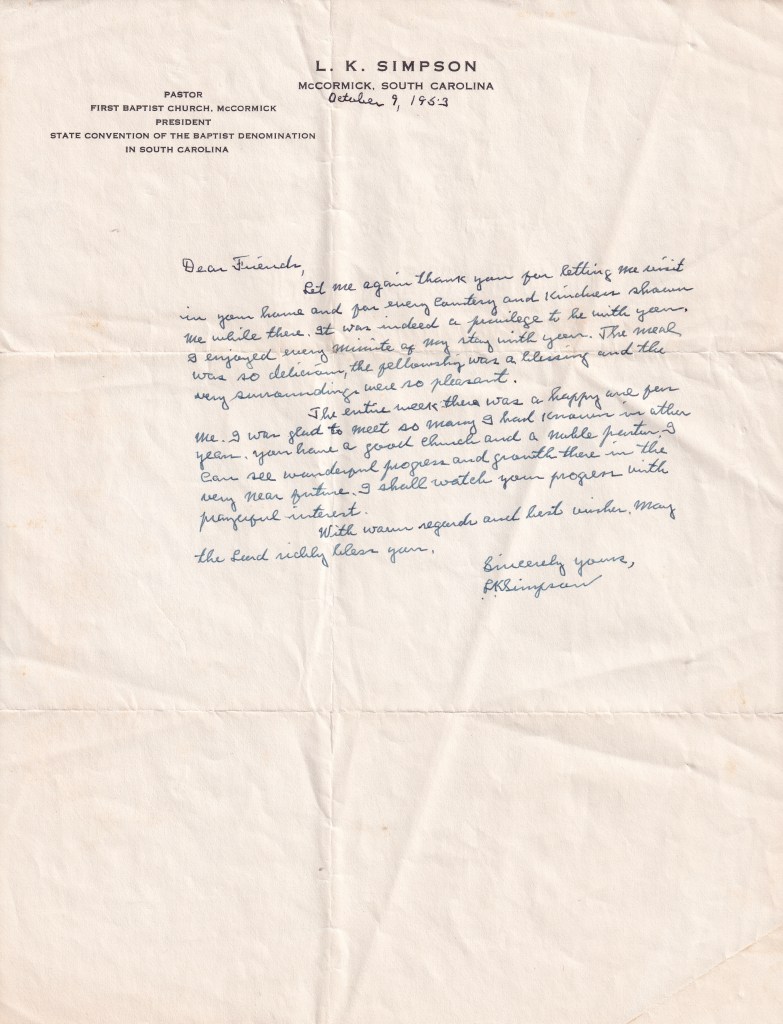
A letter written by L.K. Simpson in 1953. This letter is a part of the Annie Nicoll McCarrell Collection in the NGU Archive. 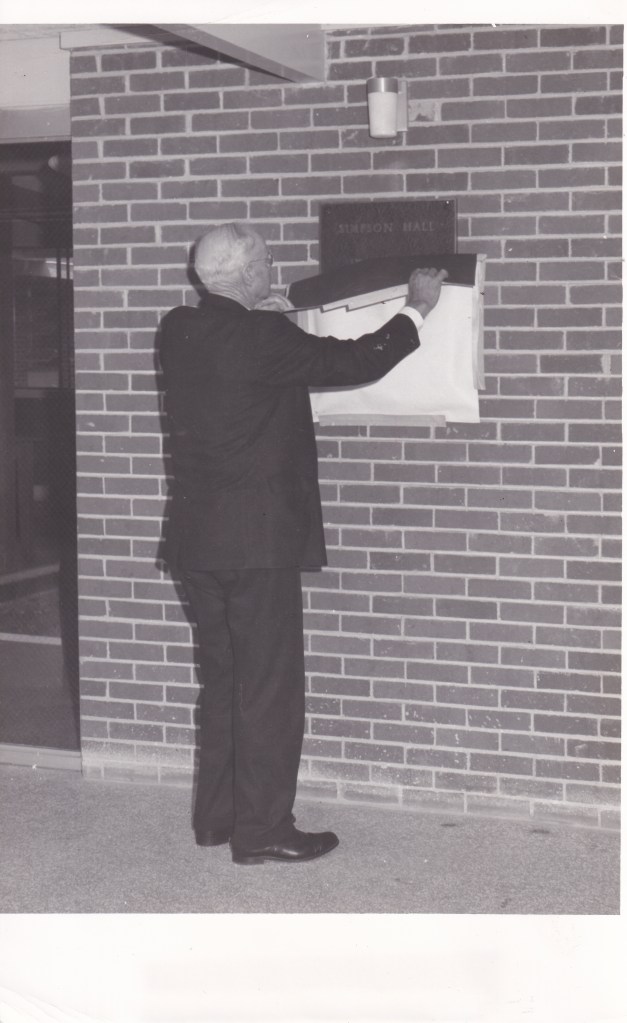
The Simpson Hall plaque unveiling at North Greenville in 1963 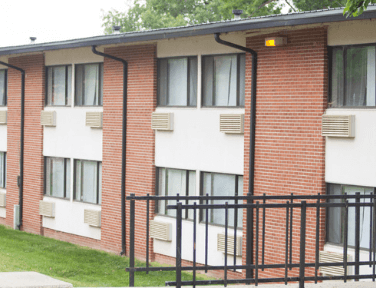
Simpson Hall today
 From These Roots
Leave a comment