
North Greenville has a long history of helping students receive an education who normally would not have had the opportunity for one. In fact, North Greenville was founded as a high school in 1892 because there were no high schools in the upper part of Greenville County. Later, students would be given reduced or free tuition in exchange for working on the campus farm or in other capacities. This allowed students who could not afford an education to receive one.
At the end of World War II, North Greenville was in a unique position to help veterans. Up until 1957, North Greenville was both a high school and a junior college. Many of the men returning from the war did not have high school diplomas, so the thought of going to college was just a dream. The government was offering them funds for a college education, but they did not have the educational background to enter college. North Greenville gave these men a way to come and finish their high school work and then seamlessly begin their college education with an associates degree.
George Lockaby, a WWII veteran who came to North Greenville in 1946, wrote, “Rev. Bill Jordan, my pastor, introduced me to North Greenville Junior College. World War II had ended, but its effects upon my life continued. Broken in body and depressed in soul, I sat before his desk and admitted feeling called to preach. He listened patiently, then said, ‘As a disabled veteran, you’re entitled to schooling. I recommend North Greenville Junior College in Tigerville.’ I almost fell from my chair. It never occurred to me that education had anything to do with preaching.”
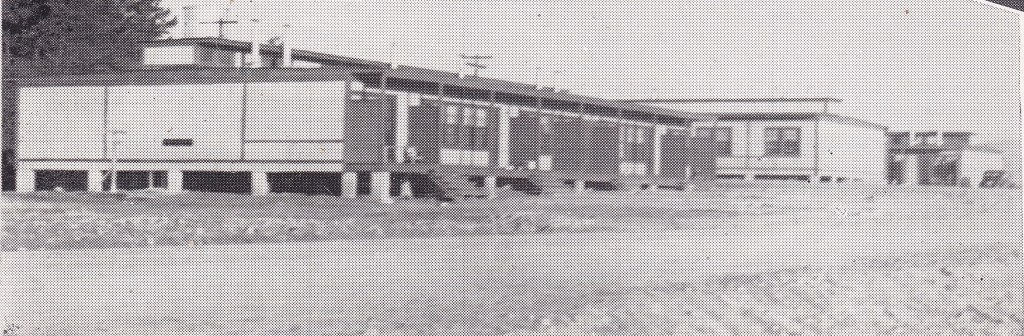
Since many of the veterans coming to North Greenville had families, new housing became a necessity. North Greenville was able to obtain discarded military barracks through the Federal Public Housing Authority. Three blocks of buildings were erected to give apartments to 18 families. “Vetville” as it came to be called, was located near where Tuttle IT Services (formerly the clinic) is today. The apartments were assigned according to family size, so some were larger than others. The buildings sat on pillars two feet high, which provided room for wind to circulate, and they were heated by oil-burning stoves.
The conditions in Vetville were not the best, but Lockaby wrote, “During that first winter at Vetville, wind blowing under apartments jacked lavatories off walls and commodes up off floors. That may have disturbed wives and children, but not men who had slept in foxholes with frozen bodies, crawled in mud, and survived typhoons and torpedoes. Prevailing conditions required adaptation. But men and women who faced and adapted to worse, while separated by war, adapted to these together. Men with purple hearts, silver stars, and disability seldom discussed the harrows of war. If any ever did, it was done privately, not publicly.”
Another issue facing the veterans and their families in Vetville was living expenses. The government covered tuition and fees, and each veteran received $90 per month for living expenses. The rent at Vetville was about $11 per month, and what was left after that was not quite enough to survive on, even in the 1940s. So, many veterans worked part time jobs on campus or preached at local churches in order to provide for their families. There are many stories of God providing for veteran families in times of need. The following was a story told by Rev. G.W. Allen.
“One evening, a car with the pastor of our church, two deacons, and a Sunday School teacher drove up and parked at our front door. After a formal greeting, they came in for a short visit. Before leaving, the pastor said to me, ‘While driving up the mountain, I ran over a opossum and killed it. I thought maybe your food supply was low and I got out and put the animal in the car, thinking that it might make you folks a good meal.’ I said, ‘We are not that desperate yet!’ Then he said to me, ‘Come out to the car, I want to show you the size of that opossum.” When we opened up the back of his car, I could not believe what I saw. Food items everywhere, even in the back seat of the car! The food was unloaded and placed in our front room. We thoroughly enjoyed their visit, but was glad when they left so we could share our God-sent blessings with others in Vetville who were in as much need as we were. Don’t underestimate God’s ability to supply your every need! He is always faithful!”
Despite it all, the veteran families drew close to each other and offered support. Veterans with cars would give rides to others and this was especially important when someone was sick or injured because they had to drive to Greer for medical care. B.I. Epting, another WWII veteran who came with his family to North Greenville in 1946, later wrote, “We helped each other out and we were like one big family. We ate, had fun, and even studied together! Those are still happy memories.”
Tigerville Baptist Church also offered support to the veterans and their families. In the early days of Vetville, the church was still meeting in North Greenville’s auditorium. When the church started to build their own building, many of the veterans in Vetville helped with the construction. A group of veterans, including B.I. Epting, also formed a singing group and began traveling around to different churches. At each church, they took a “love offering,” and those offerings were donated to Tigerville Baptist Church so that the church could purchase an organ. The church also had a leader whom God placed there at just the right time. Rev. Jessie Hill was the pastor of Tigerville Baptist Church, and he had served as a chaplain in the army in Europe during World War II. That experience enabled him to understand the men who lived in Vetville and minister to them in a way other pastors may not have been able to do.
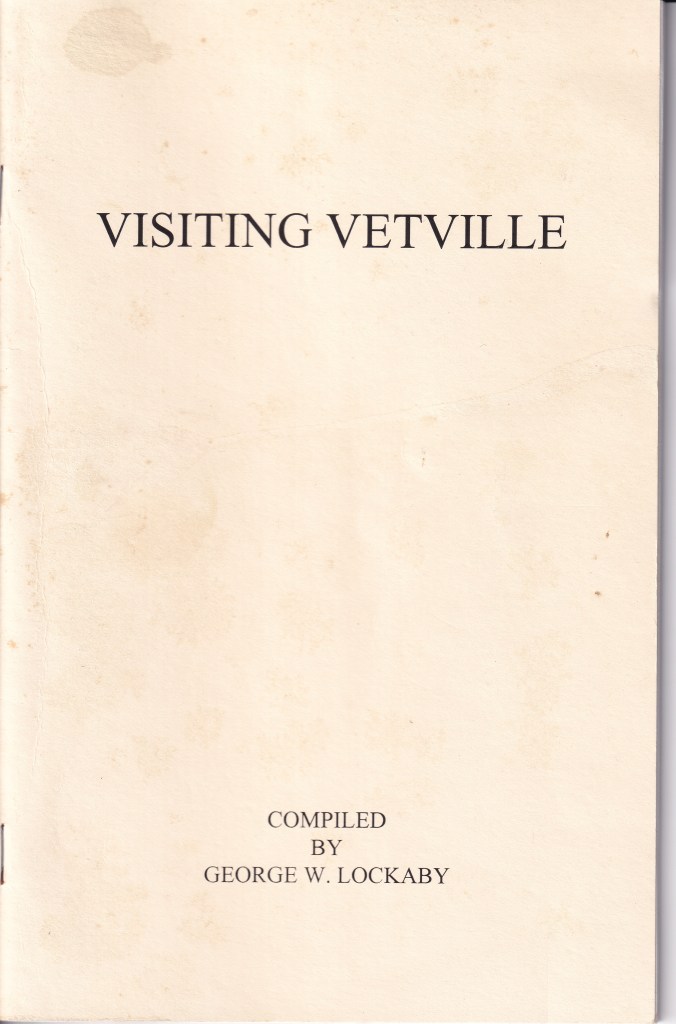
Eventually, the number of veterans coming with their families to North Greenville slowed, and the high school portion of the school ended in 1957. The Vetville buildings were never meant to be used long-term, and they were torn down. Later in life, George Lockaby realized that many of his friends from Vetville had passed away, and he decided to compile a book to share Vetville stories before there was no one left to tell them. The book was titled “Visiting Vetville” and includes stories from George Lockaby, Lewis Gibson, Carl Raines, Jonnie Morris, Les Seay, B.I. Epting, and G.W. Allen.


Leave a comment