

“In overcoming the power of darkness, North Greenville has done more good than all the revenue officers and sheriffs combined for a hundred years. In instilling a love for Christ, it has changed the streams once used for whiskey into rivers of baptism.”- Dr. E.B. Crain
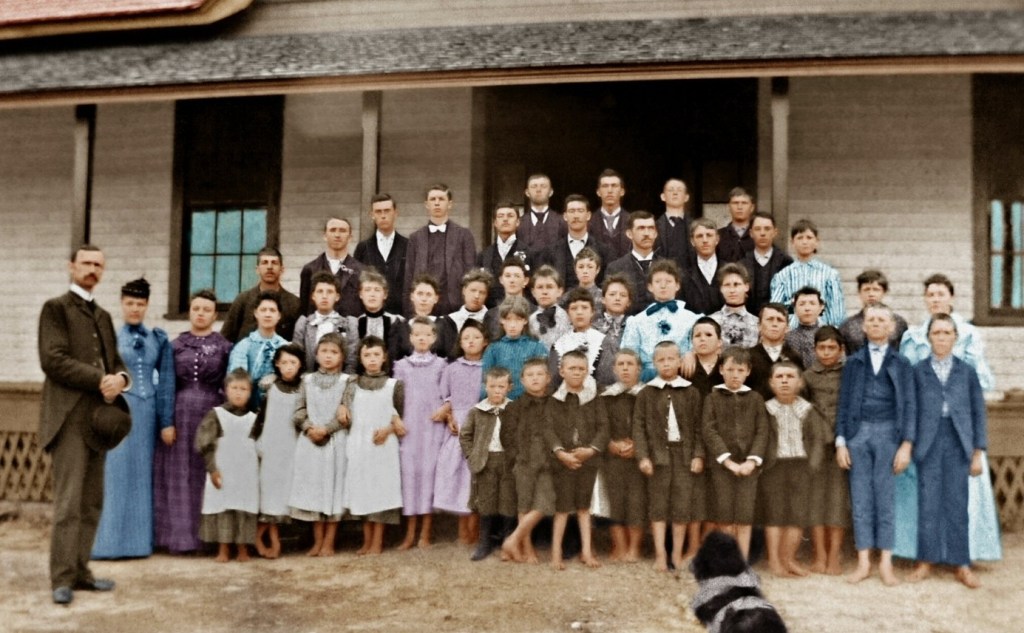
When the founders of North Greenville High School met in 1891 to discuss opening a high school in the “Dark Corner” of Greenville County, South Carolina, they could not possibly have known what their little school would one day become. Their main purpose at the time was to bring a Christian education to an area that was known more for murder and moonshine than faith and scholars. They believed that if they could offer their youth a solid education grounded in the word of God, their children would have better opportunities than they had.
The school struggled financially from the very beginning, but God used faithful men and women to keep North Greenville afloat even when similar schools in other areas were closing their doors. By the 1920s, however, broader educational reforms in South Carolina threatened the school’s future. In 1924, the South Carolina General Assembly passed the 6-0-1 law, which was legislation designed to modernize and standardize public education across the state. As public high schools rapidly expanded, private secondary schools such as North Greenville faced mounting challenges. Families who once depended upon church-supported academies increasingly had access to free public education close to home. Yet the rise of public high schools also created a new opportunity: growing numbers of graduates now sought access to higher education.
North Greenville’s leadership recognized that survival would require transformation. Rather than competing indefinitely as a private high school, the institution could meet an emerging need by becoming a junior college that served students who desired additional education beyond high school. The trustees began seriously exploring this possibility in 1928 when they hired Dr. J. T. Bowden as a financial agent to raise between $150,000 and $200,000 for expansion. In 1929, the trustees also petitioned the South Carolina Baptist Convention to appoint a committee to study the feasibility of establishing a junior college at North Greenville. The fifteen-member committee ultimately recommended against the proposal in 1930, citing the school’s debt, inadequate facilities, and limited landholdings.
The Southern Baptist Convention Home Mission Board, which had long supported North Greenville as one of its mountain mission schools, shared similar concerns. Though sympathetic to the vision, the board believed the school lacked the resources necessary to sustain collegiate work. At the same time, many Baptist leaders feared that additional junior colleges might weaken enrollment at established senior institutions such as Furman University.
In spite of all of this, the North Greenville trustees and the school’s principal, Dr. M.C. Donnan, quietly continued their determination to see North Greenville become a junior college. In the fall of 1933, Dr. Donnan offered room and board to Sam Lawton and his family in exchange for Lawton completing a special project for the school. Sam Lawton was a former faculty member of North Greenville who was finishing his dissertation work through Vanderbilt University to become the first born-blind person to earn a PhD in the United States. The special project was to create a survey of junior colleges to examine the advisability of North Greenville becoming a junior college.
Accompanied by his wife Alice, Lawton spent months traveling across South Carolina, North Carolina, and Georgia, visiting junior colleges, interviewing administrators, and studying their academic programs. Their findings proved remarkably encouraging. In several cases, the Lawtons concluded that North Greenville’s faculty possessed stronger academic credentials than instructors at many existing junior colleges.
When Lawton completed his fifty-page report, he presented it to the trustees in the prayer room of Taylor Hall, the old men’s dormitory. Convinced by the findings, the trustees unanimously voted to establish junior college instruction at North Greenville. Lawton even proposed renaming the institution “Aurora College,” reflecting its location in the northernmost part of Greenville County and its mission to spread the light of Christian education throughout the region. Though the name was never adopted, the vision behind it reflected the school’s growing sense of purpose. Lawton was subsequently elected Dean of Instruction, becoming the first academic dean of North Greenville Junior College. At the time, only one other blind individual in the United States served as an academic dean of a college. Dr. Donnan was also elected as the first president of the college.
Once the trustees approved for North Greenville to become a junior college, the next phase of work began. For the junior college to be successful, it needed the support of senior colleges in the area. Dr. Lawton, Alice Lawton, and Dr. Donnan traveled extensively to gain the support of neighboring institutions. They successfully persuaded Coker College, Wofford College, and Furman University to accept transfer students from North Greenville.
The negotiations with Furman proved particularly revealing. Furman’s president initially proposed requiring North Greenville graduates to pass examinations before receiving transfer credit. Lawton objected, arguing that such requirements unfairly questioned the qualifications of North Greenville’s faculty. He noted that while many introductory courses at larger universities were taught by upperclassmen, every North Greenville instructor held at least a master’s degree. His argument ultimately prevailed, and Furman agreed to accept North Greenville students without examination.
The next challenge was to get the South Carolina Department of Education to recognize North Greenville as a college so that its students would have teacher certificates when they graduated. Together, the Lawtons made their case to J.H. Hope, the superintendent of education in Columbia. Mr. Hope pointed out that the custom of his department was to wait several years for a school to prove itself first. Sam Lawton answered, “I am only asking you to recognize what we have.” Mr. Hope was so impressed by their arguments that he granted his approval and gave them a recognition letter to take back to North Greenville.
The first year of college at North Greenville went well, so the trustees approved the second year of college to be added. In 1936, the first college class of North Greenville Junior College graduated. Mr. J.H. Hope, the superintendent of the SC Department of Education, showed his support of North Greenville by serving as the commencement speaker that year. Nettie Onell Barnette was the first college graduate to receive a diploma. The other graduates that year included Lessie Lee Campbell, John D. Carter Jr., Grady Culbreth, Cleo Evans, Marion Moorhead, Marguerite McKinney, Thomas L. Neely, and Arthur Boyd Turner. These nine trailblazers represented the beginning of a new era in the school’s history.
For several decades, North Greenville thrived as a junior college serving mostly the Upstate and broader region. Yet by the late 1980s, the institution again faced a severe financial crisis. Enrollment declined sharply, finances deteriorated, and portions of campus property, including the campus lake and surrounding land, were sold in an effort to keep the school operating.
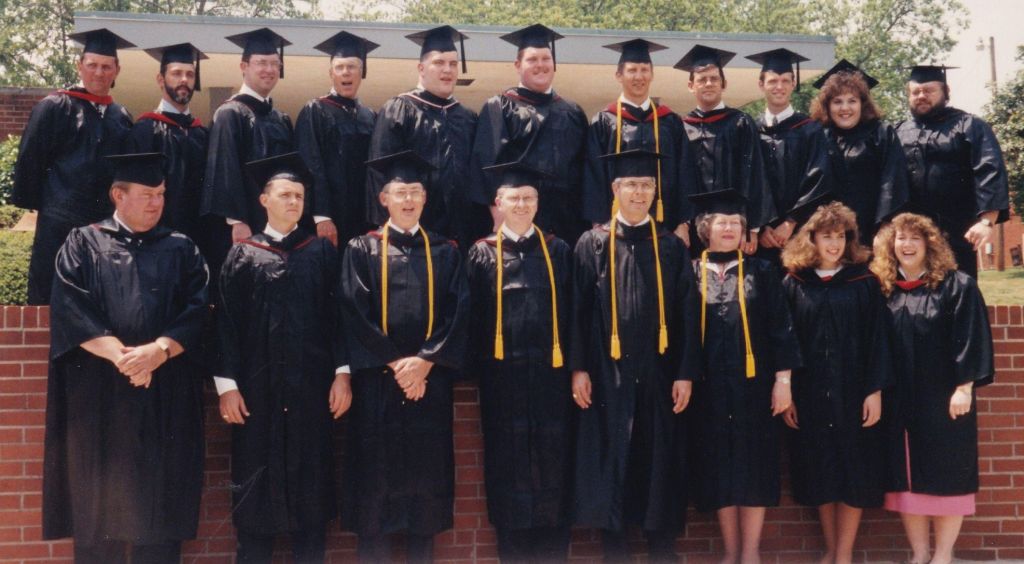
By 1991, many observers believed closure was imminent. The school’s financial instability, declining enrollment, and perceived drift from its Christian mission prompted the South Carolina Baptist Convention to appoint a committee to consider whether North Greenville should close altogether. However, the trustees had other plans for North Greenville. They gathered together and prayed for hours. When they were finished, they decided that God wasn’t done with North Greenville yet.
Their search for new leadership led them to Dr. James Epting, a former Dean of Students whose father had also attended North Greenville. Epting accepted the presidency fully aware that the institution stood at a crossroads. He believed that the school’s future depended not only upon financial reform but also upon a renewed commitment to its Christian identity.
Under Dr. Epting’s leadership, North Greenville adopted the motto “Where Christ Makes the Difference,” emphasizing the integration of faith throughout campus life. Cost-cutting measures stabilized finances, but Epting also recognized that long-term survival required institutional expansion. In 1992, North Greenville began the transition from a junior college to a four-year institution.
The prayers of the trustees were answered in ways they probably could not have imagined. The transformation proved remarkable. North Greenville achieved accreditation as a four-year college in 1994 and experienced sustained growth throughout the late 1990s and early 2000s. New academic buildings and residence halls reshaped the campus, donor support increased significantly, and graduate programs were eventually added. In 2005, the institution officially became North Greenville University.
Despite all the odds, God has used North Greenville to further His kingdom for over 134 years. This mission statement was laid out by the current president, Dr. Gene Fant, but has been the same throughout the school’s history: North Greenville seeks to glorify God by cultivating graduates who are equipped to serve as transformational leaders for church and society. What began as a small mountain high school for the children of the Dark Corner evolved into a university serving students from across the nation and around the world while continuing to carry forward the mission envisioned by its founders in 1892.
 From These Roots
Leave a comment